
Gion, Kyoto. The sight of graceful maiko, the bustle of restaurants, the chatter of tourists—at its heart, a vermilion shrine stands in quiet solitude.
This is Yasaka Shrine. For over a millennium, it has been a place of prayer for the eradication of plagues and the well-being of the people, holding the “spiritual core” of the city.
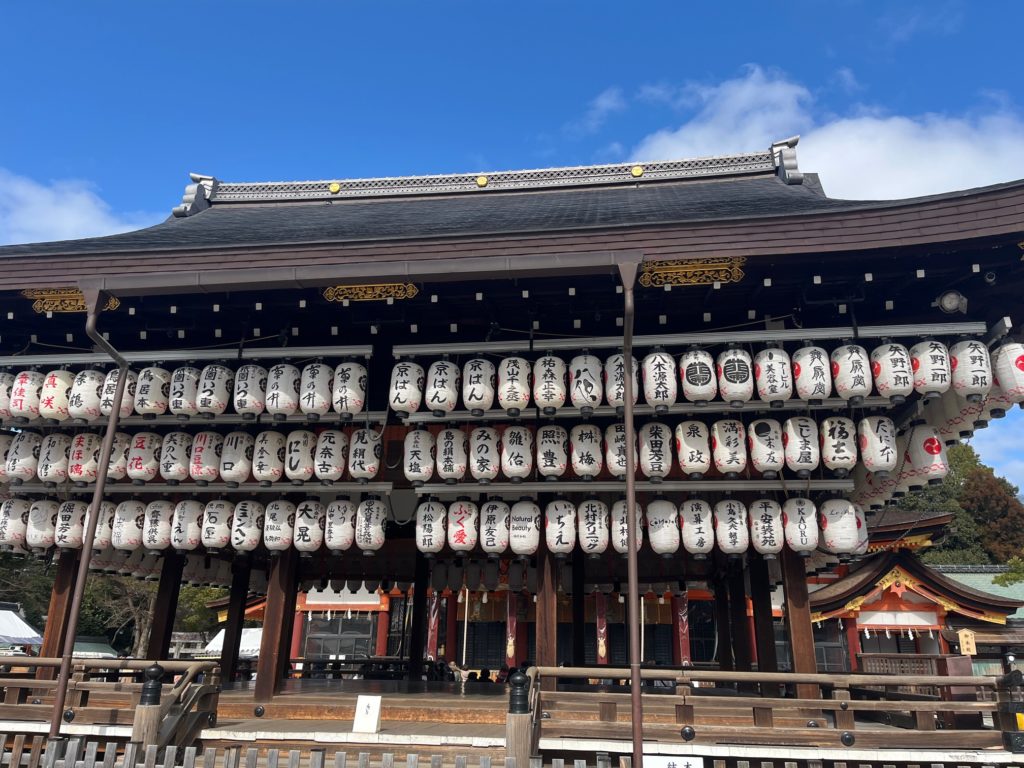
A Form of Prayer Born with Plague
The origins of Yasaka Shrine can be traced back to 656 AD, during the reign of Empress Saimei.
However, its presence became deeply ingrained in the hearts of Kyoto’s people during the Heian Period (794 AD–), a time of widespread plague.
The Gion Festival originated in 869 AD, specifically during the Jogan 11th year, when people prayed for the eradication of a rampant epidemic by enshrining the deity of Yasaka Shrine.
Frightened by an unseen calamity, people sought salvation in the divine.
The Gion Festival was born as a symbol of that prayer.
Even today, whenever the majestic floats and lanterns of the Yamahoko procession parade through the city, one feels as if the very air of Kyoto is being purified.
This shrine has long been believed to possess the power to ward off illness and is still visited by countless worshipers.
Utsukushi Gozensha: The Beauty of Inner Purity
In a corner of Yasaka Shrine is Utsukushi Gozensha (“Shrine of the Beautiful Lady”), which is popular among young women seeking beauty.
However, the shrine’s meaning goes deeper than mere physical appearance.
The “Beauty Water” that wells up in front of the shrine feels like more than just a liquid to apply to your skin; it’s a water to cleanse your heart.
True beauty is a reflection of inner purity.
When we see a maiko in Gion quietly bowing in prayer at this shrine, we catch a glimpse of the profound aesthetic sense of Kyoto.
The Changing Seasons and Memories of Vermilion
In spring, cherry blossoms dance in the air; in autumn, the vibrant foliage dyes the shrine grounds.
The vermilion of the shrine buildings remains a constant place of prayer, embracing the colors of each season.
During the evening light-up, Yasaka Shrine is enveloped in an enchanting glow, appearing as if it’s a gateway to another world.
Behind its facade as a tourist destination, a quiet spirituality endures.
Resonance with the Streets of Gion
Amid the dazzling splendor of Gion, Yasaka Shrine is a place to pause and reflect. It quietly continues its prayers, accepting the footsteps of the people, the smiles of the maiko, and the chatter of tourists.
When the portable shrines of the Gion Festival parade through the town, the distance between the divine and the human world shortens for a brief moment. The craftsmanship in the decorations of the Yamahoko floats and the soul dwelling in the music of the festival’s orchestra are all an extension of Yasaka Shrine’s prayer.
The Shrine’s Role in the Modern Age
Even in the modern scenery of young people with smartphones in hand and tourists seeking the perfect Instagram shot, Yasaka Shrine remains a constant “place of prayer.”
A shrine is a place that connects the past and the present. It is where people go to wish for something or to let go of something.
The stillness of Yasaka Shrine gently draws out the “desire to pray” that lies deep within the modern heart.
Yasaka Shrine and Geisha Culture
Yasaka Shrine’s Gate Teahouses: Yasaka Shrine was a place where many pilgrims came seeking protection from plagues.
To welcome these visitors, rest stops called “mizu-jaya” or “water teahouses” were set up in front of the shrine’s gate.
These teahouses served tea and traditional sweets.
Entertainment by Teahouse Women: Over time, the women working at these teahouses began to entertain guests with songs and dances, rather than just serving refreshments.
This was a way to attract more customers and is considered the origin of the “gei” (art) performed by a geiko.
The Birth of Maiko: To further attract customers, they started having young, charming girls in beautiful kimonos perform dances.
This is believed to be the beginning of the maiko.
In this way, the simple teahouses serving pilgrims to Yasaka Shrine evolved into places for entertainment, giving birth to the hanamachi of Gion and the culture of geiko and maiko that we know today.
Yasaka Shrine continues to have a strong connection with the hanamachi, especially Gion Kobu.
During festivals like the Gion Festival, geiko and maiko offer their traditional dances, preserving this historical relationship.
The tranquility of Yasaka Shrine and the beauty of Gion can be experienced on our Kyoto Free Walking Tour in Gion District.
We invite you to walk and feel the “unseen beauty” of Kyoto for yourself.
You Might Also Like
・Chion-in Temple Kyoto: Hidden Gem & “The Last Samurai” Filming Location
・Shinto Shrines vs. Buddhist Temples: A Journey into the History of Japanese Prayer
| 【PR】 Your trip planning is almost complete! Complete your preparation by securing the one guide that guarantees confident interactions and a truly respectful experience in Japan. [Get the Kindle Edition Now on Amazon] |