
Who is that Raccoon Dog Statue You See in Japan?
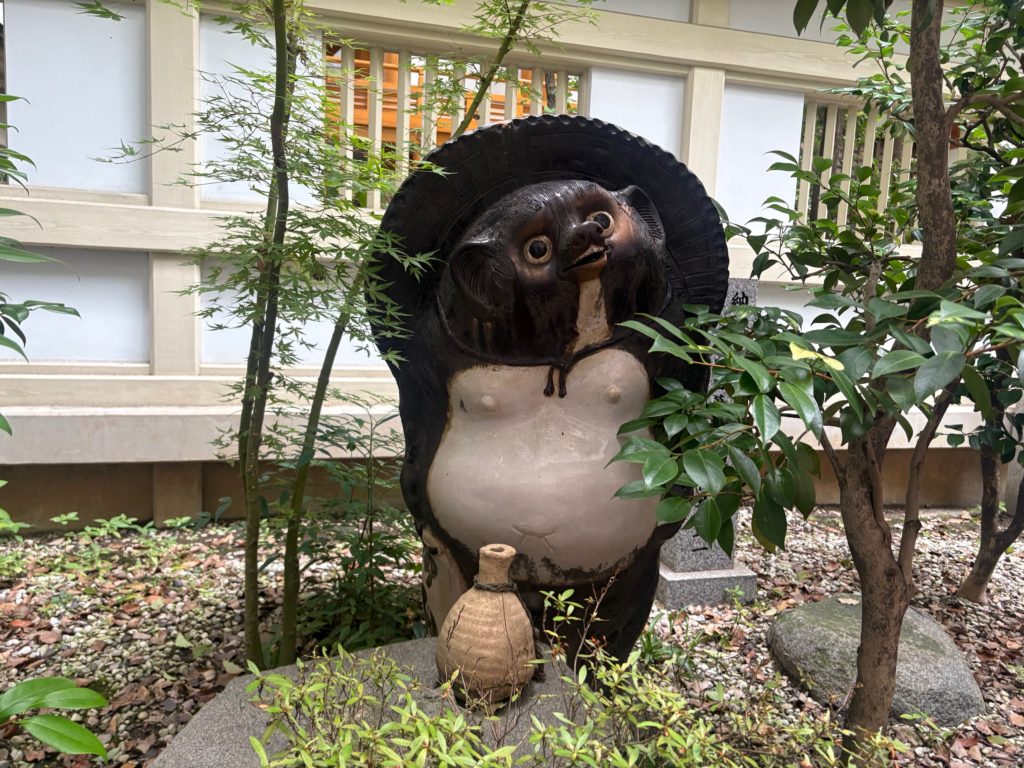
If you have ever traveled or stayed in Japan, you have surely seen the sight of a large Tanuki (Raccoon Dog) statue wearing a straw hat and sporting a full, cheerful smile outside izakayas (Japanese pubs) or storefronts!
Why are there so many of these tanuki at Japanese shop entrances?
The truth is, that humorous figure is packed with eight teachings for wishing success in business and in life.
“Not a Raccoon!” The Tanuki is an Animal Endemic to Japan
While it is often mistaken for a Raccoon overseas, the Japanese Tanuki (Japanese Raccoon Dog) is actually an animal endemic (native) to Japan.
Today, allow us to explain a little about these tanuki statues.
The main production center for many of these tanuki statues is Shigaraki-cho in Koka City, Shiga Prefecture.
The pottery produced here is called Shigaraki-yaki.
Basic Information on the Tanuki Statue (Shigaraki-yaki Tanuki)
1. Origin and Roots
- Production Area: The statues are Shigaraki-yaki ceramics, primarily made in Shigaraki (しがらき), Koka City, Shiga Prefecture.
While Shigaraki-yaki is counted as one of the Six Ancient Kilns of Japan, the history of the tanuki statue itself is relatively short, said to have begun in the Meiji Period by a ceramic artist. - National Popularity: In 1951 (Showa 26), when Emperor Showa visited Shigaraki Town, people lined the roads with many Shigaraki tanuki holding small Japanese flags (Hinomaru).
It is said that the Emperor was deeply moved by the sight of the seemingly endless line of tanuki and composed a poem, an anecdote that was reported in the news and led to the statue’s national recognition.
2. Meaning as a Good-Luck Charm
The tanuki statue became popular, especially at shop entrances, because its name, “tanuki (たぬき),” is a pun on “Ta-nuki (他抜き),” which means “outdoing others.”
This signifies the wish to surpass competitors and achieve business prosperity.
It is also believed to bring good fortune, financial luck, and family safety.
3. The Eight Fortunes (Hassō Engi)
The Shigaraki tanuki is imbued with eight auspicious meanings for bringing good luck, known as Hassō Engi (八相縁起).
| Part/Item | Meaning |
| Straw Hat (Kasa) | Avoiding unexpected disasters; being well-prepared (Averting misfortune, protecting oneself) |
| Big Eyes | Looking everywhere (in all directions) and making correct judgments (Paying attention to one’s surroundings) |
| Smile (Egao) | Always being friendly and amiable (Charm conducive to business prosperity) |
| Sake Bottle (Tokkuri) | Acquiring virtue and never running out of food or drink (Effort to cultivate virtue) |
| Account Book (Kayoi-chō/Daifuku-chō) | Trust first, being socially adept (The importance of credibility) |
| Big Belly (Onaka) | Possessing both composure and boldness; having great generosity (tolerance) |
| Money Bag (Kinbukuro) | Inviting financial luck and never running out of money (Ability to use money freely) |
| Thick Tail (O) | Concluding things successfully and firmly (True happiness lies in completing matters well) |
The teaching embedded in the statue is that acquiring these eight virtues leads to success in business and in life.
For this reason, tanuki began to be placed outside many shops and restaurants, and eventually, they became a common sight throughout Japan.
The Secret of Where to Place the Tanuki Statue: Entrance? Direction? Tips for More Blessings
Although there are no strict rules regarding where to place the statue, they are generally placed at entrances or storefronts for a few reasons: to invite good luck, to be noticeable, and because it is often considered auspicious from a feng shui perspective.
Check Them Out When You See Them!
The next time you spot a tanuki statue in Japan, be sure to look closely at its “Big Eyes” and “Straw Hat.”
Knowing the deep meaning behind each part of its body will surely change the way you view the humble tanuki!
| 【PR】 Your trip planning is almost complete! Complete your preparation by securing the one guide that guarantees confident interactions and a truly respectful experience in Japan. [Get the Kindle Edition Now on Amazon] |