
Travelers to Japan are bound to encounter both Shinto shrines and Buddhist temples.
Both are places of serene tranquility and prayer, but they are rooted in completely different faiths and purposes.
In this article, we’ll explore the differences between shrines and temples, which are deeply ingrained in our daily lives, from their history and architecture to their prayer customs.
1. A History of Faith: From Syncretism to Separation
Shrines are places based on Shinto, which originated from Japan’s ancient nature worship and ancestor veneration.
It is believed that spirits reside in natural elements like mountains, rivers, and trees, and people revere the eight million gods (yaoyorozu no kami).
Temples, on the other hand, are based on the teachings of Buddhism, which was introduced to Japan via China and Korea.
They enshrine Buddhas and Bodhisattvas, with a spiritual focus on achieving enlightenment and liberation from the cycle of reincarnation.
Historically, Shinbutsu-shūgō, or the syncretism of Shinto and Buddhism, was common in Japan, and gods and Buddhas were often regarded as the same beings.
It was not unusual for shrines to exist within temple grounds or for shrine deities to be identified with Buddhist figures.
However, with the Shinbutsu-bunri (Separation of Shinto and Buddhism) decree in the Meiji era, the two faiths were officially separated.
This separation led to a tragic period known as Haibutsu-kishaku, a movement to abolish Buddhism, which resulted in the destruction of many temples and Buddhist statues. The current state of shrines and temples was shaped by this historical turning point.
2. Shinto Gods vs. Buddhist Deities: Their Existence and Roles
At the core of Shinto and Buddhist beliefs are the differences between the “gods” enshrined at shrines and the “deities” at temples.
Understanding these two types of beings provides a deeper insight into Japanese spirituality.
What are Gods?: Familiar Beings Residing in Specific Places In Shinto, gods are considered to be beings that reside in specific places.
People believe that nature itself, such as mountains, rivers, forests, and rocks, holds sacred power, and a god resides in each of these places.
Additionally, historical figures, ancestors, and patrons of specific crafts or professions can also be enshrined as gods.
For example, Amaterasu Ōmikami, enshrined at Ise Grand Shrine, is the supreme deity of the sun. Sugawara no Michizane, famous as the god of learning, was originally a politician from the Heian period.
In this way, Japanese gods are diverse and familiar beings deeply connected to nature’s blessings, its threats, and people’s daily lives.
What are Buddhist Deities?: Enlightened Beings Who Save Others In contrast, Buddhist deities are positioned as enlightened beings.
They aim to save people from suffering and guide them on the right path. While early Buddhism (such as Theravada) focused on individual enlightenment, the Mahayana Buddhism that spread in Japan emphasizes the salvation of others.
Prominent Buddhist deities include Yakushi Nyorai, who heals illnesses and relieves suffering, and Amida Nyorai, who guides people to the Pure Land after death.
Thus, there are many types of Buddhist deities, and each, with their compassion and wisdom, guides us.
3. Architectural Differences: A Worldview Told Through Design
Differences in faith are clearly reflected in the architecture and layout of these sites.
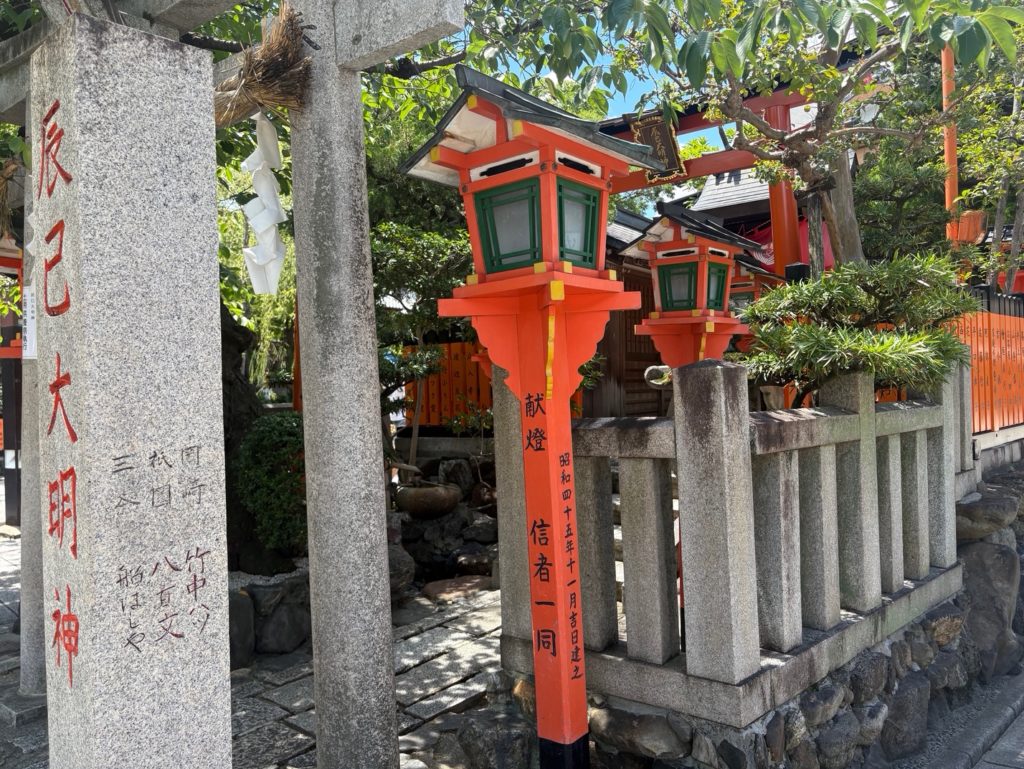
- Shrines: Passing through a torii gate, which separates the sacred from the secular world, you’ll see crimson-colored shrine halls and a pathway covered in white gravel.
The crimson color is believed to ward off evil, while the white paper streamers called shide and nusa symbolize Shinto’s “purity.”
A key feature is the separation of the honden, where the deity resides, and the haiden, where worshippers offer their prayers.
At the entrance to the path or in front of the worship hall, komainu (guardian lions) are often enshrined to ward off evil. - Temples: Upon entering through the imposing sanmon (main gate), you’ll notice the wooden main hall and other structures.
They are often built in subdued colors with minimal embellishment, which reflects the Buddhist teaching of introspection.
Inside the main hall, however, the statues and paintings of Buddhas are adorned with gold and vibrant colors to express the solemn splendor of the world of enlightenment.
4. Purpose of Prayer and Rituals: Dialogue with Daily Life and Spirituality
The prayers and rituals performed at shrines and temples also differ significantly.
- Shrines: Prayers here mainly focus on happiness and safety in this life, such as for academic success, safe childbirth, business prosperity, and warding off evil.
The basic ritual is “nihai-nihakushu-ichihai” (bow twice, clap twice, bow once).
The clapping is believed to call the deity and express joy and gratitude. Life events such as Hatsumode (first shrine visit of the year) and Shichi-Go-San, as well as local festivals, are deeply tied to Shinto. Ema (wooden plaques for wishes), omamori (charms), and hamaya (lucky arrows) are also symbolic of shrine culture. - Temples: The focus is on communication with the deceased and spiritual discipline, such as memorial services,
Buddhist masses, and visiting graves during Obon and Ohigan.
The basic ritual is gasshō (pressing palms together), often accompanied by shōkō (incense burning). Temples are also places for spiritual practice, such as zazen (meditation) and shakyō (sutra copying).
Although ancestor worship is not a core concept in original Buddhist teachings, it has become a deeply rooted custom in Japan, a result of the fusion between Buddhism and ancient Japanese ancestral veneration.
5. Guiding Figures of Prayer: Shinto Priests and Buddhist Monks
The roles of the people who guide these prayers also differ.
- Shinto Priests and Shrine Maidens: At shrines, kannushi (priests) and miko (shrine maidens) wear white robes and perform rituals, acting as intermediaries between the people and the gods.
- Buddhist Monks: At temples, sōryo (monks) wear kesa (robes) and transmit Buddhist teachings to people through chanting and sermons.
In Conclusion: Different Forms of Prayer, Same Path to Inner Peace
While shrines and temples are based on different faiths, both serve as places to calm the heart.
By understanding the significance of each, your travels will become more enriching.
Why not take some time to immerse yourself in the tranquility of a shrine and a temple?
Our Kyoto Free Walking Tour in Gion District takes you through Yasaka Shrine and Chion-in Temple, offering a chance to feel the forms of Japanese prayer firsthand.
You Might Also Like
・Yasaka Shrine Kyoto: From Plague Prayers to Geisha Origins
・Chion-in Temple Kyoto: Hidden Gem & “The Last Samurai” Filming Location
| 【PR】 Your trip planning is almost complete! Complete your preparation by securing the one guide that guarantees confident interactions and a truly respectful experience in Japan. [Get the Kindle Edition Now on Amazon] |