
Introduction: The Climax of Excitement and Chaos
Today, Monday, October 6th, 2025, marks the final week until the closing of the EXPO 2025 Osaka-Kansai on Monday, October 13th.
The venue in Yumeshima, the man-made island, is, as reported daily, experiencing a genuine climax of excitement.
However, the reality for locals is complex. As an Osaka resident, I’m witnessing an extreme gap between the “emptiness at the start in April” and the current “last-minute rush.”
The surging demand has led to severe overcrowding, and in some cases, even people who hold tickets cannot get in—a state of utter “tenyawanya” (a Japanese term for being in a complete frenzy or chaos).
I was one of the many who desperately wanted to attend this historic festival, but witnessing this final-stage chaos, I reluctantly gave up on my visit.
This blog is for foreign readers who, like me, feel disappointed that they couldn’t go, and for those who wonder, “What exactly is the World Expo?”
I’ll explain the background of this fervor and offer lessons to avoid similar frustration on your next trip to Japan, all from the unique perspective of “someone who couldn’t make it.”
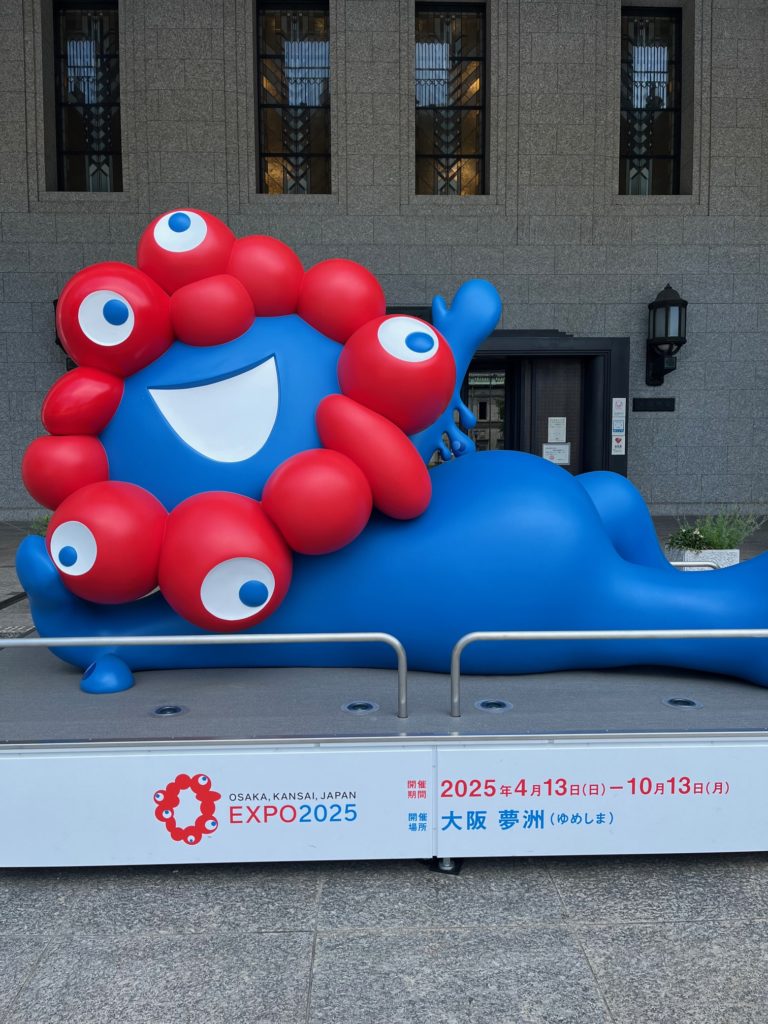
World Expo Primer: What Osaka 2025 Means
Many foreigners may be unfamiliar with the significance of the Expo.
But once you understand the World Expo’s history and its international role, the reason for this fervor becomes clear. This context is what the Osaka Expo 2025 truly means.
1. The Expo’s Grand Historical Role and Legacy
The World Expo is the largest global event, held about every five years to celebrate “Human Progress.”
- The “Laboratory of the Future”: Countries use it to propose their visions for the “Future of Life,” showcasing the latest technology and culture. Historically, inventions like the telephone, television, and the escalator were first unveiled at Expos.
- A City’s Legacy: Structures built for the Expo—like the Eiffel Tower in Paris and the Atomium in Brussels—often remain as permanent city symbols. The Osaka theme is “Designing Future Society for Our Lives,” focusing on global challenges like health and sustainability.
2. Japan’s Deep Connection and Fervor
Japanese people hold a special place in their hearts for the Expo because of a major success story from the past:
- EXPO ’70 in Osaka: Held in 1970, it symbolized Japan’s post-war recovery and its hope for the future. The iconic “Tower of the Sun” (by artist Taro Okamoto) remains the most visible landmark of that legacy.
- A First in 55 Years: For us Osaka locals, this 2025 Expo was a chance to recapture the excitement of 1970. This blend of “nostalgia and future hope” is the primary cause for the massive last-minute rush we’re seeing now.
How to Plan Your Japan Trip Better: 3 Lessons from the Chaos
The blend of historical significance and closing-week intensity has led to the current “tenyawanya” at the venue. Here are three critical lessons from this situation that will help you plan your next trip to Japan.
Lesson 1: A Ticket is NOT an “Admission Guarantee”—Reservations are the Real Battle
The final week’s chaos clearly shows that simply buying an admission ticket is insufficient. For Japan’s hugely popular events, securing pavilion reservations and time-slot tickets is the real test.
- The Takeaway: When visiting super-popular events in Japan, you need to expect a separate “reservation war” for specific attractions.
Start reading the official rules at least six months in advance and prepare to act fast. Don’t underestimate the demand.
Lesson 2: Waiting in Line is “Culture,” But Your Travel Time is Finite
While enduring long queues might feel like a part of the “Japanese experience” for some travelers, waiting multiple hours for a single pavilion or a meal is a waste of precious travel time.
- The Takeaway: If an event is forecasted to be crowded, have the courage to narrow down your focus.
If I had gone, I would have limited my experience to the Grand Ring Walkway and the no-reservation Commons Pavilions.
I would spend the rest of my time on Osaka’s unique street food culture (like the Takoyaki and Kushikatsu of Dotonbori), which offers a far more authentic taste of the city’s energy.
Lesson 3: The Best Legacy Remains in the “City”—You Are the Next Main Character
The Expo will officially close on October 13th. However, the event’s theme is already spreading throughout the Kansai region.
- The Next Focus: The Expo site will eventually transform into an IR (Integrated Resort) and an international tourism hub.
The real story is the start of “Post-Expo Osaka.” - Your Next Trip: Use this lesson to plan better.
If you want to avoid future crowds, consider exploring less-affected “hidden gems” in Kansai, such as Kobe or Wakayama, instead of the usual rush to Kyoto or Nara.
Conclusion
The Osaka Expo 2025 will close, leaving us with both great inspiration and the “challenge” of its final-week chaos.
But this very intensity proves that Japan is once again moving and connecting with the world. Turn the lessons from this missed opportunity into a successful plan for your next trip.
We hope to see you back in Osaka when the city’s new chapter begins!
| 【PR】 Your trip planning is almost complete! Complete your preparation by securing the one guide that guarantees confident interactions and a truly respectful experience in Japan. [Get the Kindle Edition Now on Amazon] |