
| 【PR】 Making a trip to Japan? Don’t risk a cultural mistake! Your comprehensive guide to Japanese etiquette and greetings is essential for every traveler. [Get the Kindle Edition Now on Amazon] |
🇯🇵 Introduction: Ramen or Sushi, Which is “Washoku”?
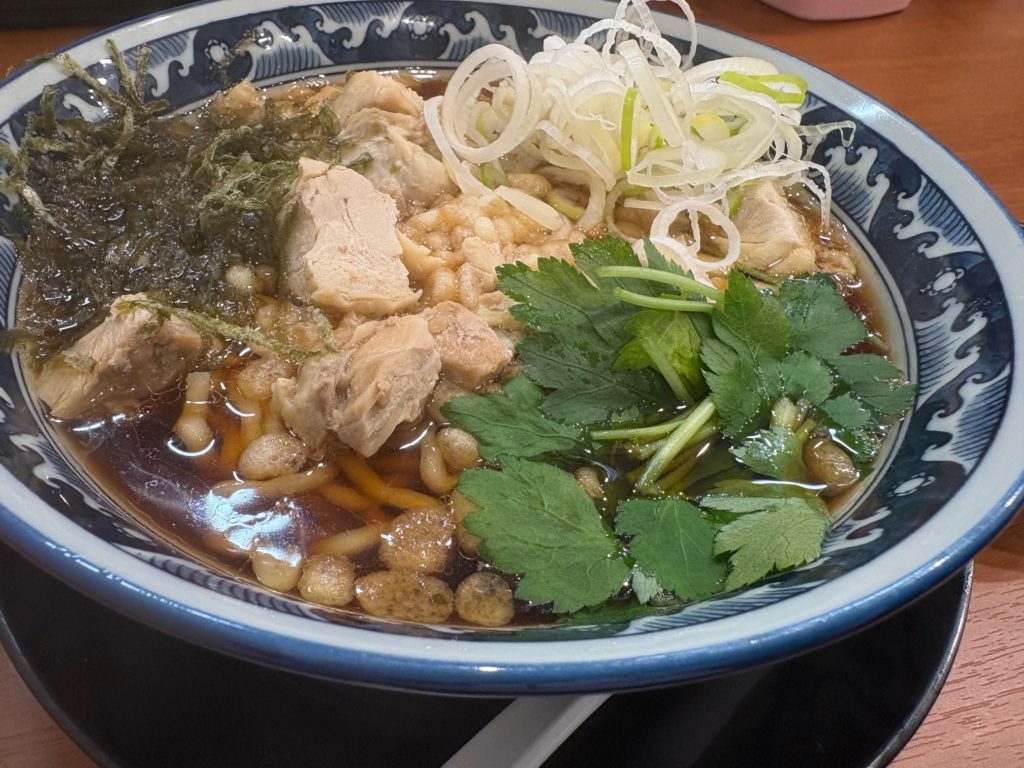
When people abroad think of “Japanese food,” many will likely picture Sushi, Tempura, and certainly Ramen and Gyoza (dumplings).
All of these are wonderful dishes, either born in Japan or developed uniquely here.
However, among them, there are some dishes that are not officially included in the framework of “Washoku” (traditional Japanese cuisine) registered as a UNESCO Intangible Cultural Heritage.
Those are the incredibly popular Ramen and Gyoza.
This article will clearly explain the true definition of “Washoku” recognized by UNESCO and how Ramen and Gyoza have carved out their own special place in Japan’s food culture.
1. 🍣 The Definition of “Washoku” Recognized by UNESCO
In 2013, “Washoku; the traditional dietary cultures of the Japanese” was inscribed on the UNESCO Intangible Cultural Heritage list.
What was registered here was not a specific dish (e.g., sushi) but the entire practice and culture surrounding food based on the Japanese spirit of “respect for nature.”
This “Washoku culture” is composed of the following four main characteristics:
🌟 Four Characteristics of “Washoku”
| Characteristic | Specific Content |
| Respect for the Change of Seasons | Using seasonal ingredients and expressing the beauty of spring, summer, autumn, and winter through presentation and dishware. |
| Healthy Diet | Based on “Ichiju-Sansai” (one soup, three side dishes), offering excellent nutritional balance. It also utilizes the umami of Dashi (broth) and fermented foods (miso, pickles, etc.), minimizing animal fats. |
| Close Tie to Annual Events | The existence of special celebratory foods closely tied to annual events, such as Osechi (New Year’s food) and Zōni (rice cake soup), which strengthen family and community bonds. |
| Respect for Diverse Ingredients and Their Natural Flavors | Utilizing diverse ingredients from the sea, mountains, and fields, along with cooking techniques that bring out the natural flavor of the ingredients. |
🚨 Why Ramen and Gyoza Don’t Fit the “Washoku” Definition
The framework of this UNESCO-registered “Washoku” emphasizes the basic form of “Ichiju-Sansai” rooted in the home kitchen and its connection to the seasons and ceremonial events.
Therefore, since Ramen and Gyoza are single-dish meals that complete the entire meal on their own, they are respectfully explained as being outside the frame of this “traditional dietary practice and culture.”
2. 🥟🍜 The Roots of Ramen and Gyoza and Their Unique Evolution in Japan
Although Ramen and Gyoza stand apart from the strict definition of “Washoku,” they are indispensable to Japanese food culture.
They are a prime example of how Japan excels at adopting foreign cultures and nurturing them into a unique “Japan Style.”
Why Is It Hard to Call Them “Traditional Cuisine”?
The main reasons why Ramen and Gyoza are distinguished from “traditional Washoku” like miso soup and pickles are as follows:
- Chinese Origin: Both Ramen and Gyoza were introduced to Japan from China, and they evolved uniquely within Japan.
- Relatively Short History: Compared to ancient Washoku (miso, pickles, simmered dishes), their widespread popularity in Japan began between the Meiji and early Showa periods, meaning their history is less than 100 years old.
- Do Not Fit the Washoku Definition: As mentioned earlier, they do not fit the framework of “Ichiju-Sansai” meal composition and ceremonial food emphasized by UNESCO Washoku.
Unique Evolution in Japan: The “Wasei Chuka” (Japanese-Style Chinese) Genre
Ramen and Gyoza, brought over from China, have been completely transformed through Japanese climate and ingenuity, establishing a distinct genre known as “Wasei Chuka” (Japanese-Style Chinese food).
- Ramen has developed an astonishing array of variations—from Sapporo Miso to Hakata Tonkotsu—tailored to local water, ingredients, and regional tastes.
- Gyoza (dumplings) became predominantly the pan-fried “Yaki Gyoza” (grilled gyoza) rather than the boiled “Sui Gyoza” common in China.
Furthermore, the unique combination of “Gyoza and Rice” became a nationally established set meal.
3. 🎌 Cultural “Miscegenation” is the True Charm of Japan
The fact that Ramen and Gyoza are not “UNESCO Washoku” by no means implies they are of lesser value to Japanese food culture.
Rather, they symbolize the “diversity” and “speed of evolution” of Japan’s cuisine.
Japan has always been skilled at flexibly incorporating foreign cultures (Chinese, Western, etc.) and refining them into something uniquely Japanese.
Ramen and Gyoza are perfect examples of this; they are not merely foreign dishes but “food that symbolizes modern Japanese culture,” redefined, beloved, and developed in Japan.
✨ Conclusion
“Washoku” refers to the Japanese spirit of food that respects nature and values the connection to family and the seasons.Ramen and Gyoza, while influenced by that spirit, are the Japanese national comfort food that has continued to grow and evolve with the times and people’s preferences.
| 【PR】 Your trip planning is almost complete! Complete your preparation by securing the one guide that guarantees confident interactions and a truly respectful experience in Japan. [Get the Kindle Edition Now on Amazon] |