
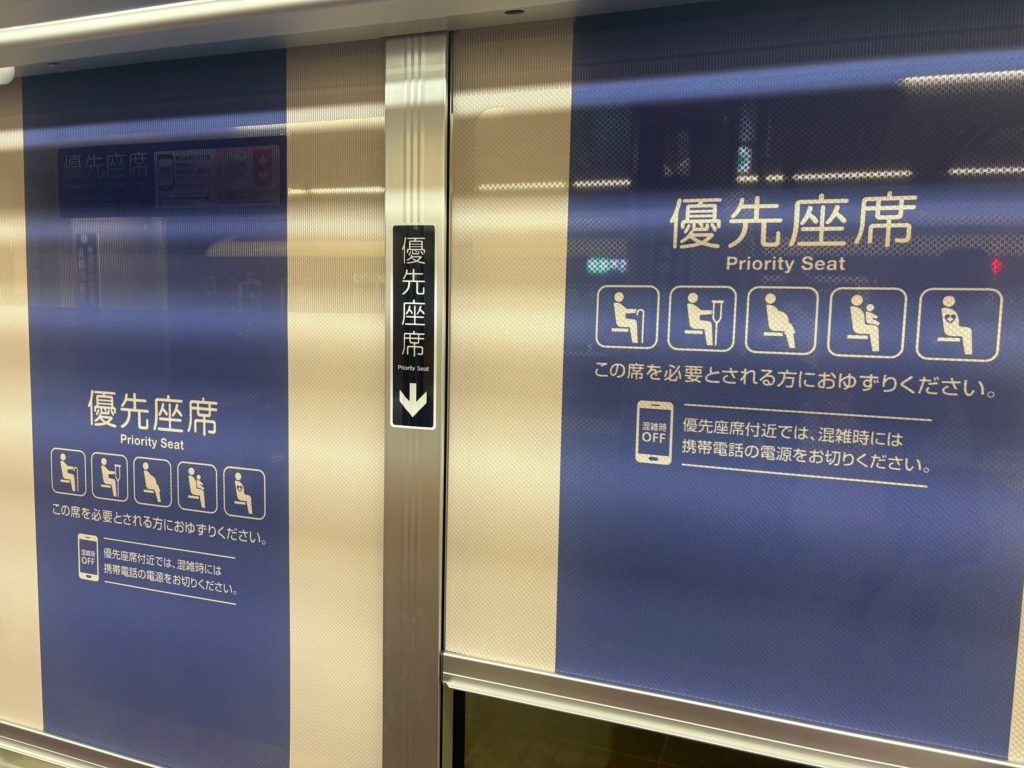
Have you ever noticed those special seats on Japanese trains with a distinct icon?
These are priority seats, and understanding them is key to navigating public transport in Japan.
While the rules may seem different from what you’re used to, they reflect a deeper culture of consideration and courtesy.
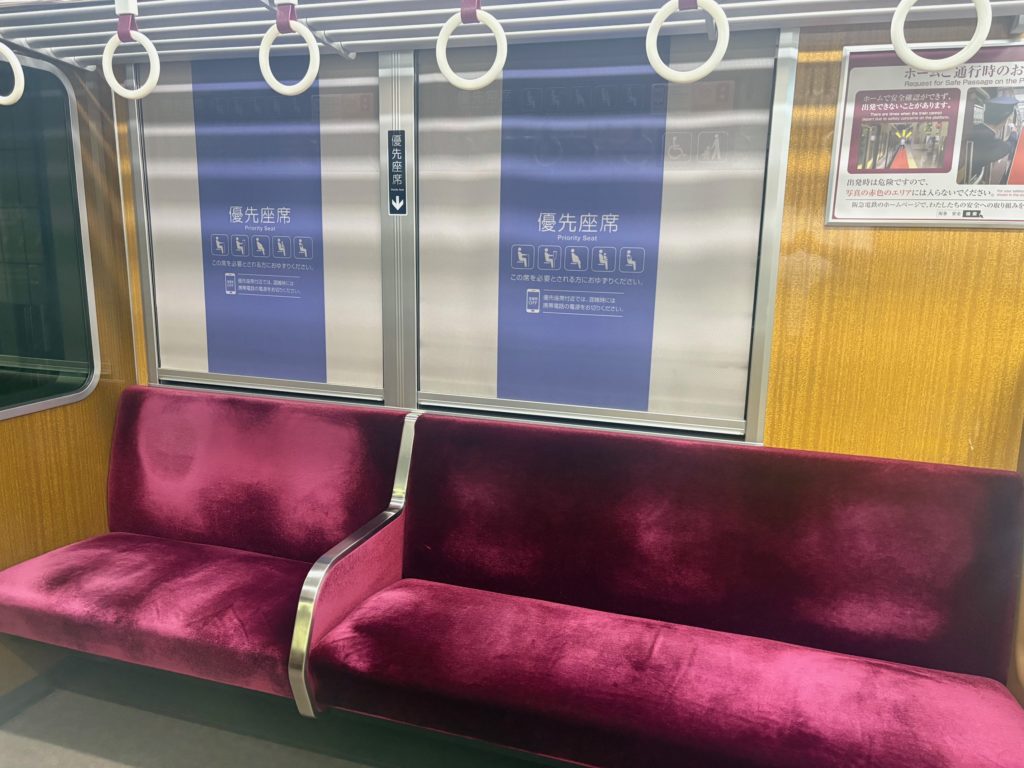
What are Priority Seats?
Definition: Priority seats are designated for people who need them more than others.
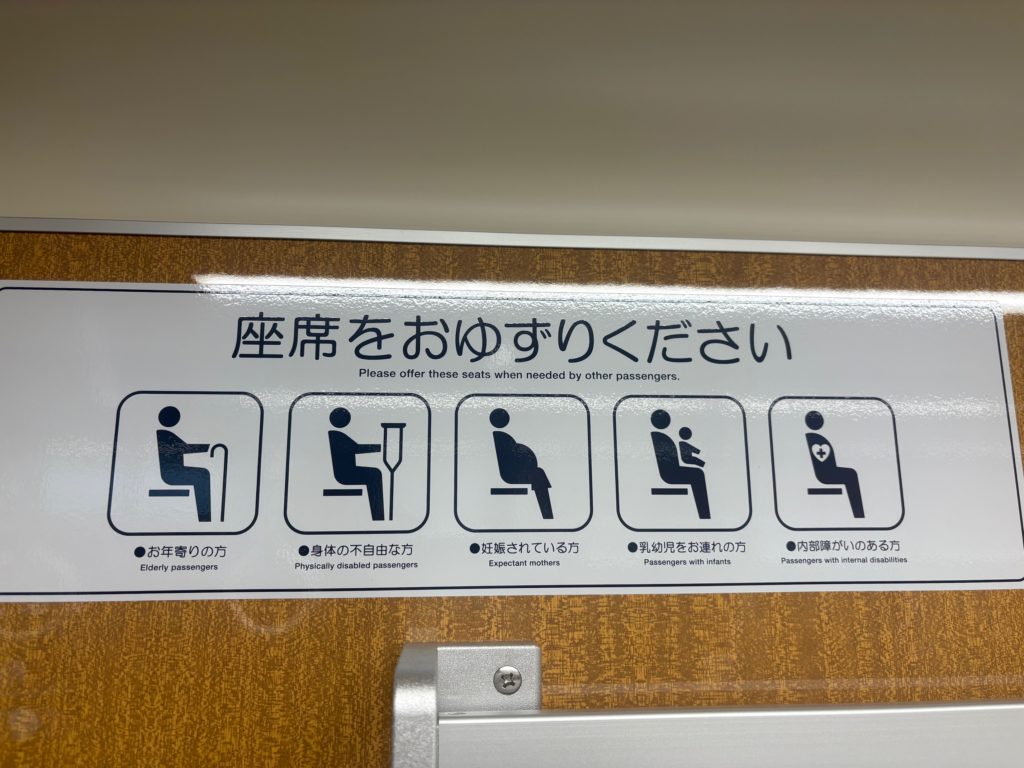
This includes the elderly, individuals with disabilities, pregnant people, those with injuries, or people who are not feeling well.
How they are marked: You’ll see them clearly labeled as “優先席” (yūsen-seki) or “Priority Seat.”
The signs often include pictograms showing the people who should use them.
Location: They are typically located at the ends of train cars or near the doors for easy access.
A Look at “Japanese-ness”
The culture surrounding priority seats offers a fascinating glimpse into Japanese social values.
- The Culture of Consideration: Giving up a seat is not a forced rule but a voluntary act of kindness.
The etiquette is based on being mindful of others and their needs without having to be asked. - Quiet and Subtle Communication: Unlike in some other countries where offering a seat might be done with a loud voice, Japanese people often do it subtly. A person may just stand up silently and signal with their hand, or simply stand in front of the person they are offering the seat to.
- Order in Public Spaces: The respectful use of priority seats is part of a larger culture of order and courtesy on public transport, which includes practices like forming neat lines and avoiding loud conversations.
The History of Priority Seating: A Modern Japanese Tradition
You might wonder, as many do, why a country known for its politeness needs to designate special seats in the first place.
This is an excellent question and gets to the heart of the matter.
While the act of offering a seat to someone in need is a universal gesture, the history of priority seats in Japan suggests a modern solution to an age-old concern.
The first designated seats, called “Silver Seats,” were introduced on a national railway line on September 15, 1973, a day celebrated as Respect for the Aged Day. They were initially intended for the elderly and people with physical disabilities.
The name came from the silver-colored fabric used on the seats to distinguish them.
Over time, the scope of these seats expanded to include pregnant people and those feeling unwell, leading to a name change from “Silver Seats” to the more inclusive “Priority Seats.”
While it’s true that people often give up their seats on any part of the train, designating these specific seats might have made it easier for a more reserved society to show consideration.
It created a clear signal, perhaps making it easier for a shy person to offer their seat and for someone in need to accept it without feeling awkward.
So, the next time you see a priority seat, remember that it’s more than just a symbol.
It’s a modern reflection of a deep-seated cultural value of care and consideration for others.
You Might Also Like
・Japanese Public Manners: Compassion in Silence and a Culture of Consideration