
As December draws to a close, a unique atmosphere settles over Japan—a blend of busy preparation and a quiet, sacred anticipation.
You might see people frantically cleaning their homes or hanging curious straw decorations on their doors.
These are not just chores or decorations; they are part of a deep-rooted spiritual ritual to welcome the New Year.
Today, let’s explore the profound meanings behind O-soji (Great Cleaning), Shimenawa, and Kagami-mochi.
1. Welcoming the “Toshigami-sama”
To understand Japanese New Year, you first need to know about Toshigami-sama.
Unlike the festive “party” atmosphere in many Western cultures, the Japanese New Year is centered around welcoming this special deity.
Toshigami-sama is the god of the incoming year who brings luck, health, and a bountiful harvest to each family.
They are a guardian presence, watching over the prosperity and well-being of the household.
Everything we do at the end of the year is, in essence, an act of hospitality to welcome this divine guest.
2. O-soji: A Ritual of Purification
The year-end cleaning, known as O-soji, is far more than just tidying up.
Historically called Susu-harai (soot sweeping), it is a sacred ritual to purify the home.
In Japanese culture, dust and dirt accumulated over the year are seen as “Yaku” (bad luck or spiritual impurities).
By scrubbing every corner of the house, we sweep away the misfortunes of the past year.
This physical act helps us reset our minds, creating a pure and serene space worthy of receiving the Toshigami-sama.
3. Shimenawa: The Sacred Barrier
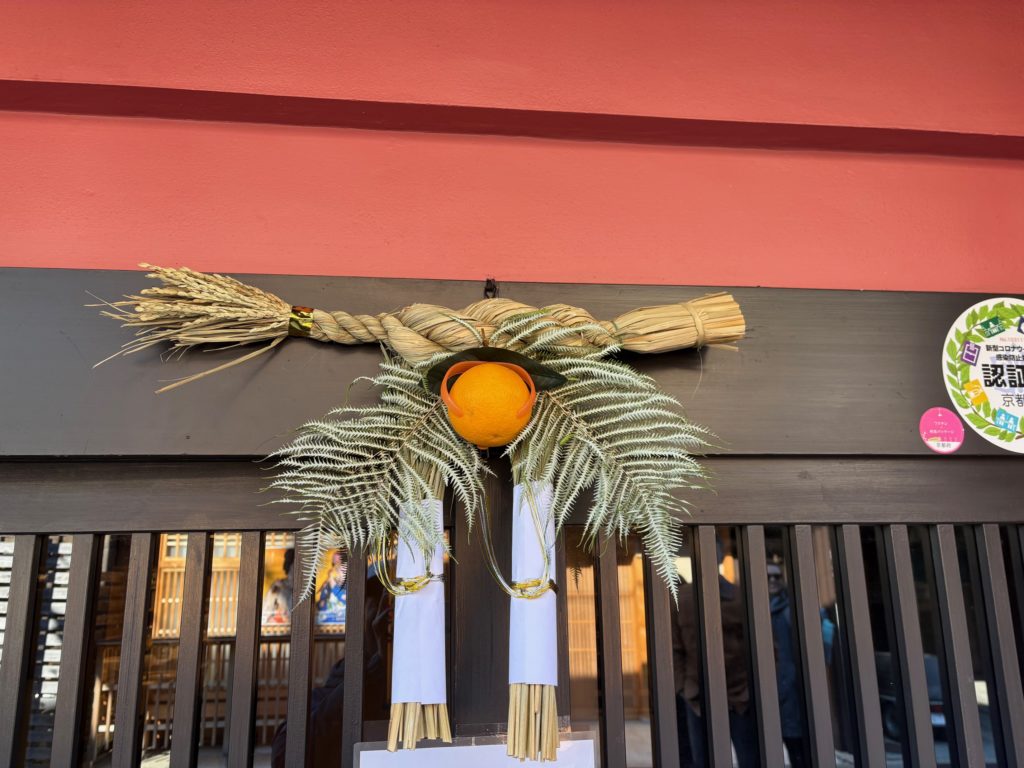
Once the house is purified, a Shimenawa (sacred rice-straw rope) is hung above the entrance.
- The Meaning: It serves as a signpost telling the deity, “This home has been purified and is ready to welcome you.”
- The “Kekkai” (Barrier): It also acts as a Kekkai—a spiritual barrier that separates the sacred space of the home from the impurities of the outside world, preventing bad luck from entering.
- The Symbolism: You will often see zigzagging white papers (Shide) hanging from the rope.
These represent lightning, symbolizing the power to drive away evil spirits.
4. Kagami-mochi: A Place for the Deity to Rest
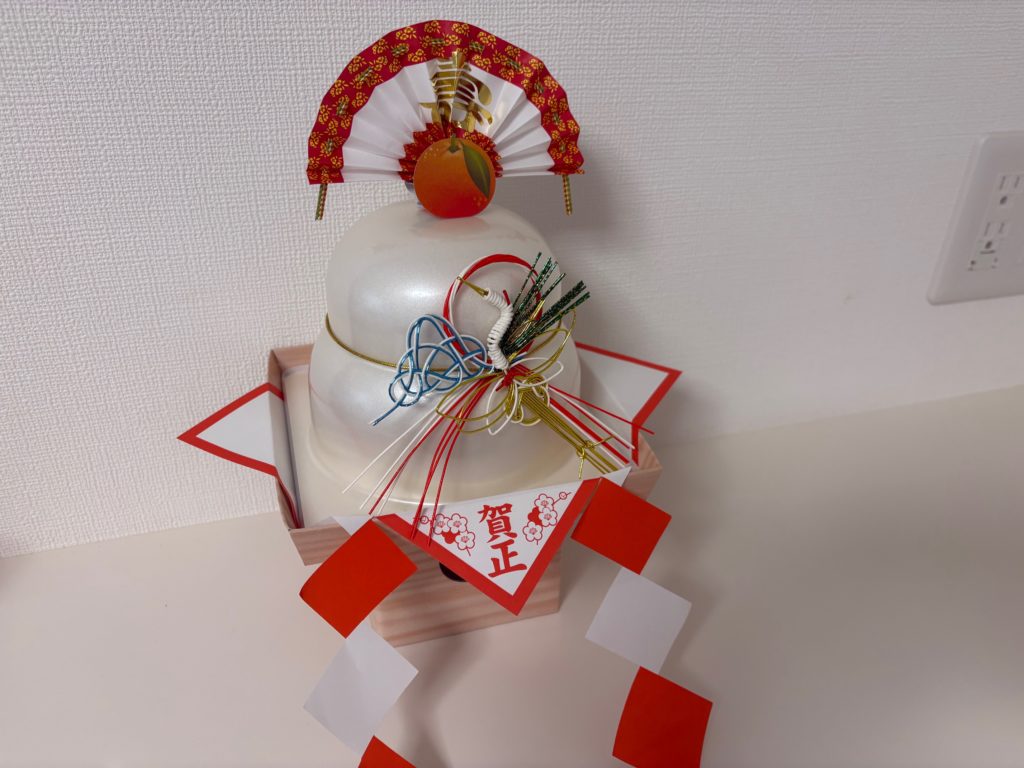
While the Shimenawa marks the entrance, the Kagami-mochi (stacked round rice cakes) is the place inside the home where the Toshigami-sama actually resides during the New Year period.
- The Name “Kagami”: In ancient Japan, mirrors (Kagami) were round bronze objects used in sacred rituals to represent the divine.
The rice cakes are shaped like these mirrors. - The Meaning of the Two Tiers: The two stacked cakes represent the Sun and the Moon, or “In and Yo” (Yin and Yang), symbolizing harmony. Furthermore, stacking them is said to represent the “connection of time”—layering the past and the future, or Heaven and Earth.
It is a prayer for the continuous flow of life and the prosperity of generations to come.
5. When to Decorate and When to Take Them Down
In Japan, timing is everything. Usually, decorations are put up between December 25th and 28th. We avoid the 29th (as the number 9 can sound like “suffering” in Japanese) and the 31st (known as Ichiya-kazari, or “one-night decoration,” which is considered disrespectful to the deity).
The period these decorations remain is called Matsu-no-uchi, but the dates vary by region:
- In the Kansai Region (Osaka, Kyoto, etc.): Tradition is held dearly here, and decorations usually stay up until January 15th.
The ritual of eating the mochi (Kagami-biraki) often takes place later, around January 20th. - Regional Variations: In contrast, in the Kanto region (including Tokyo), it is common to end the celebration on January 7th and hold Kagami-biraki on January 11th.
These variations reflect the unique ways different local cultures have honored the deity’s departure over the centuries.
Conclusion
By cleaning our homes to clear the “Yaku,” set up a “Kekkai” with Shimenawa, and honoring the “connection of time” through Kagami-mochi, we prepare ourselves for a fresh start.
Behind the year-end hustle of Japan lies a heart of gratitude and hospitality toward the invisible forces that support our lives.
This year, as you see these decorations around your neighborhood, I hope you feel the deep sense of prayer and history that comes with them.
Wishing you all a serene and prosperous New Year!