
| 【PR】 Making a trip to Japan? Want to avoid common cultural mistakes? Your comprehensive guide to Japanese etiquette and greetings is essential for every traveler. [Get the Kindle Edition Now on Amazon] |
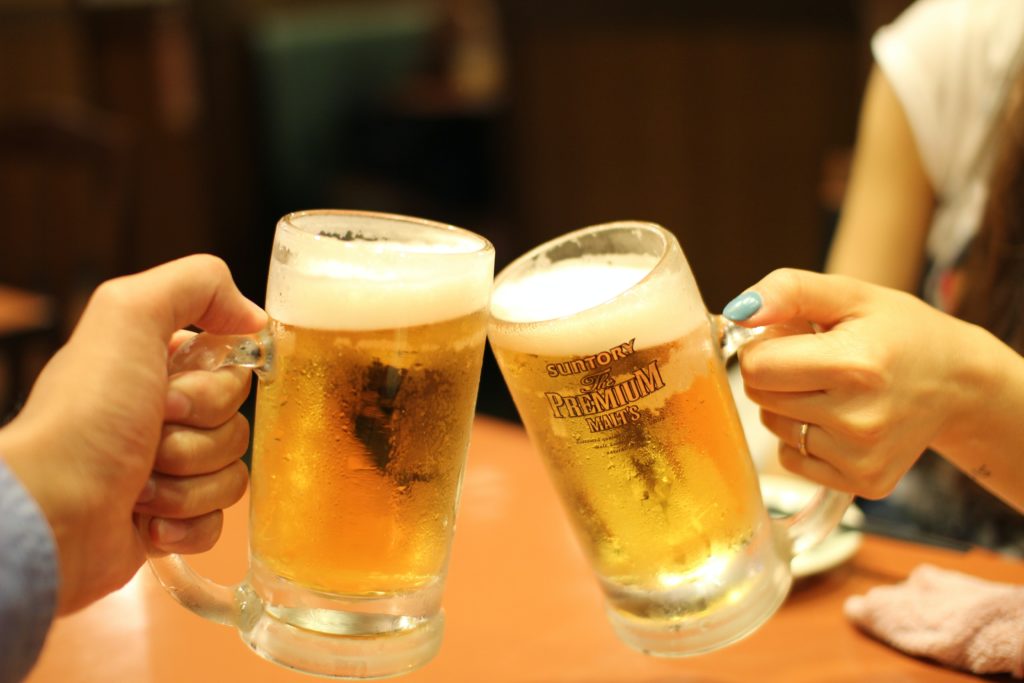
When you hear “Nomikai” (Japanese drinking party), what image comes to mind? Perhaps salarymen having beers at an Izakaya after work?
In fact, the Japanese Nomikai is much more than just a place to drink and eat. It is a cultural ritual essential for streamlining social dynamics, business operations, and interpersonal relationships in Japan.
For our international readers, here is a guide to the fascinating world of the Japanese Nomikai and its various forms.
🇯🇵 What is Nomikai? The Definition and Role
Nomikai is the broadest term (umbrella term) for any social gathering involving alcohol. Its underlying purpose is often referred to as “Nomi-nication” (drinking communication).
📌 The Primary Goals of Nomikai
- Releasing Hon-ne (True Feelings): In a society that often prioritizes position and formalities (Tatemae), the drinking setting allows people to relax and speak their true thoughts (Hon-ne), fostering deeper mutual understanding.
- Smoothing Relationships: It acts as a lubricant to bridge the distance between supervisors and subordinates, or colleagues, where formal interaction might be difficult during work hours.
- Strengthening Group Unity: It is a vital platform for sharing common goals and overcoming shared challenges, thereby boosting team solidarity.
🍻 Major Sub-Categories of Nomikai
Within the large category of Nomikai, there are various types, distinguished by their specific purpose, format, and number of participants.
| Type | Japanese Name | Primary Purpose and Timing | Explanation for International Readers |
| Annual Events | Bōnenkai・Shinnenkai | Seasonal Milestones. Appreciating the past year’s efforts (Bōnenkai – year-end) and sharing ambitions for the new year (Shinnenkai – New Year’s). | Mandatory annual ceremonies for organizational bonding. |
| Large Gatherings | Enkai (宴会) | Formal parties for large events like welcome/farewell parties or project completion celebrations, involving 20 or more people with set speeches and organization. | Formal large party/Banquet. Often involves speeches and set seating. |
| Dating Scene | Gō-kon (合コン) | A group date where groups of men and women meet, specifically aiming for romantic encounters or networking. | Japanese-style group date / Social mixer focused on finding a partner. |
| Socializing | Kompah (コンパ) | Casual small-to-medium gatherings, typically among students or young professionals, aiming for simple socializing and friendship. | Casual get-together or bonding party. |
🔍 Enkai vs. Nomikai: Scale and Formality
When an event like a Bōnenkai or Shinnenkai involves 10 to 20 or more people and includes formal elements like a Master of Ceremonies (MC) or designated seating (e.g., Kamiza), it is generally classified as an Enkai rather than a casual Nomikai. Enkai leans toward a more public, ceremonial gathering.
🌐 Unique Cultural Practices: The Nomikai Rules
Japanese Nomikai has unique customs and rules—the very aspects that international visitors often find most fascinating.
- The Ritual of Kampai: It is customary to wait for everyone to be served and ready before shouting “Kampai!” (Cheers!) to begin drinking.
- The Etiquette of Oshaku: The custom is that you do not pour your own drink; instead, you pour drinks for others, and they pour for you. This mutual gesture demonstrates consideration and hospitality. (Note: While traditionally strict, this custom is often much more relaxed in casual, modern settings.)
- Dividing the Bill (Warikan): It is common, especially among younger generations, for attendees to split the bill evenly, regardless of how much each person consumed.
The Japanese Nomikai is not just about getting drunk; it is a live lesson in social interaction, teaching attendees about their role within the group and the importance of consideration for others.
While it may be difficult for tourists to join a formal company Nomikai, you can still experience the atmosphere and culture!
Be sure to visit a local Izakaya (Japanese pub) or Yokocho (alley full of small bars) for a taste of this unique social ritual, and don’t forget to start your night with a hearty Kampai!
| 【PR】 Your trip planning is almost complete! Complete your preparation by securing the one guide that guarantees confident interactions and a truly respectful experience in Japan. [Get the Kindle Edition Now on Amazon] |