
| 【PR】 Making a trip to Japan? Don’t risk a cultural mistake! Your comprehensive guide to Japanese etiquette and greetings is essential for every traveler. [Get the Kindle Edition Now on Amazon] |
For residents of Japan, the familiar yellow, textured strips that line station platforms and city sidewalks—known as Tenji blocks—are an everyday sight. However, what is commonplace here represents an incredibly high standard of accessibility that surprises and impresses visitors from around the globe.
This article delves into the meticulous efforts of Japan’s public transportation system to establish safety and reassurance for the visually impaired, highlighting the subtle yet critical role of Braille and Tenji blocks in creating an inclusive urban landscape.
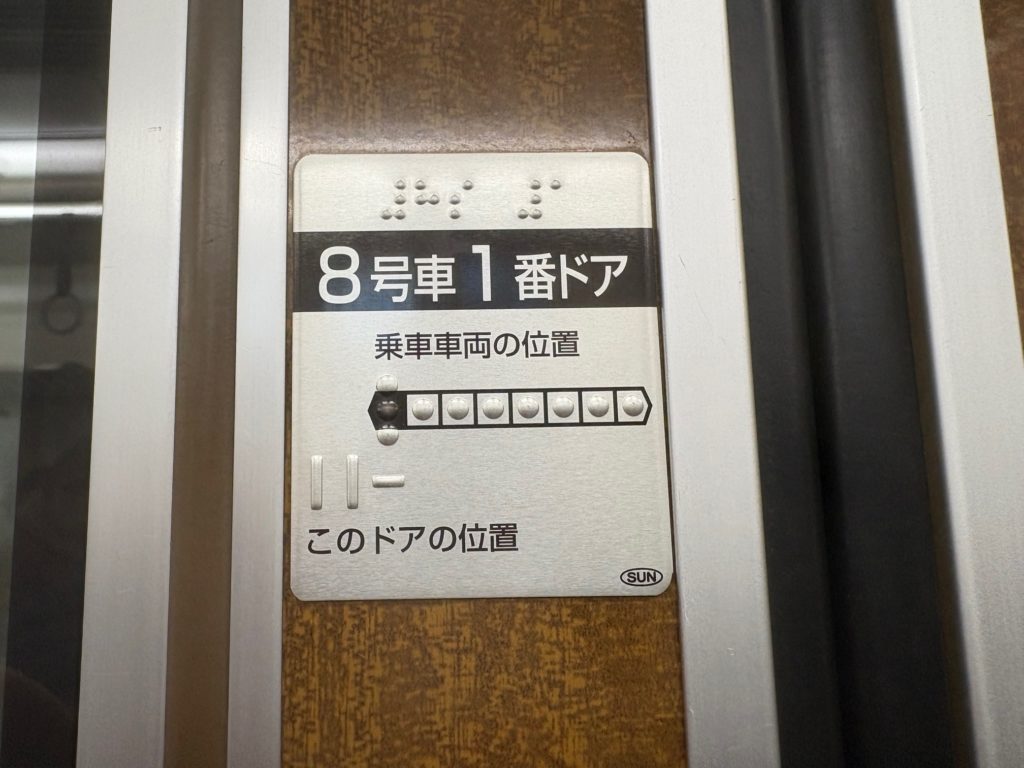
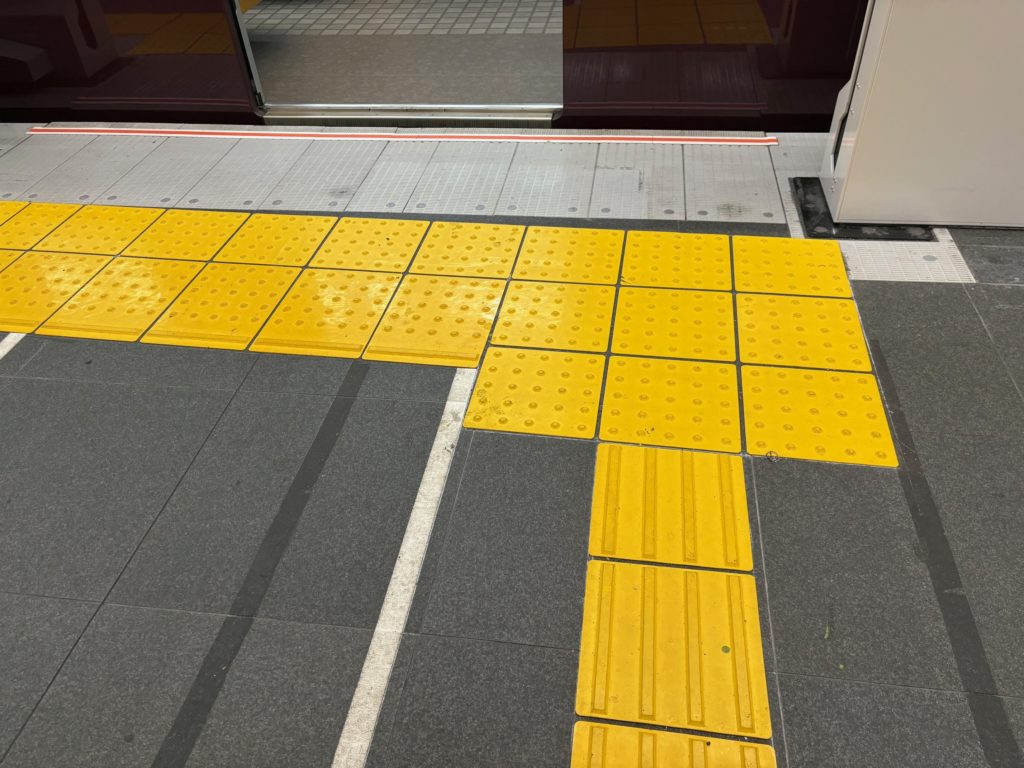
Part 1: 🚃 The Hidden Compass Inside the Train Car
We often focus on the large features of public transport, but true accessibility lies in the small details.
Consider the interior of a Japanese commuter train. Near the inside of each door, there are small, raised dots: Braille markings indicating the carriage number or car information.
🪧 The Significance of Braille by the Door
- Precise Location Information: By touching the door frame, a visually impaired passenger can accurately grasp which car number they are currently in.
- Planning the Next Move: This crucial information enables them to plan the next stage of their journey, such as aiming for an elevator or exit designated for a specific car number.
This detail functions as a “compass of security,” alleviating anxiety during movement and showcasing the depth of consideration embedded within the system.
Part 2: 🚶♀️ The Global Value of the “Guiding Yellow Road”
Stepping off the train, the path beneath one’s feet continues with the Tenji Block.
This system is formally known as Tactile Ground Surface Indicators (TGSIs), and it is the key emblem of the standard Japan offers the world.
🗺️ A Universal Language Written on the Ground
TGSIs communicate essential information through the soles of the feet or a white cane. They consist of two primary types:
| Block Type | Physical Appearance | Function and Role |
| Guiding Block | Linear, parallel raised strips | Shows the direction of travel, safely guiding the way to a destination. |
| Warning Block | Dot-shaped raised bumps (studs) | Warns of approaching danger spots, such as platform edges, stairs, or intersections. |
🥇 Tenji Blocks Originated in Japan
The Tenji block was developed for the first time in the world in Okayama Prefecture in 1967.
This Japanese system subsequently gained international recognition, being adopted by many countries and recognized as an International Standard (ISO) in 2012.
- The Key Difference is “Continuity”: While many countries have adopted TGSIs, the critical difference between Japan and the rest of the world lies in the “breadth of installation” and “continuity.”
| Comparison | Japan’s Standard | Global Norm |
| Installation Scope | Extensive—covering train stations, major sidewalks, and entrances to public and private facilities. | Often limited to critical hazard spots like platform edges and crosswalk approaches. |
| Continuity | The path is virtually unbroken from the ticket gate to the platform, often extending seamlessly onto main city sidewalks. | Installation is often fragmented and may end abruptly, potentially causing confusion. |
This uninterrupted continuity is what elevates Japan’s accessibility to a world-class standard, demonstrating a profound commitment to Universal Design.
Part 3: ✨ From “Mechanism” to “Mind”—The Barrier-Free We Sustain
Japan has successfully built a high-level environment through the “mechanism” (hardware) of Braille and Tenji blocks.
However, the final crucial element is the “mind” (software) of the people, known as “Kokoro no Barrier-Free” (Barrier-Free of the Heart).
💬 Our Shared Responsibility
For this infrastructure to fulfill its purpose, we must all be conscious of the following:
- Do not obstruct the path: Standing on or placing bags on Tenji blocks is the single greatest impediment to safe movement, effectively blocking the guidance.
- Offer the “First Word”: If you see someone pausing and seeming lost, do not hesitate to ask, “Are you having trouble?” or “May I assist you?” That one simple phrase can often provide greater peace of mind than any physical equipment.
By practicing “Kokoro no Barrier-Free,” the perfect “mechanism” and the warm “heart” can coexist, completing a safe and comfortable public space for all.
Conclusion
The Tenji blocks and in-train Braille guidance, which we often view as simply part of the scenery, beautifully illustrate Japan’s dedicated, long-term commitment to a society where all can coexist.
This level of detail offers a valuable model for accessibility that other communities around the world might consider exploring.
Rather than taking this infrastructure for granted, if we all consciously remember the purpose behind it and treat the guiding paths with respect, we can help ensure that this superior Japanese standard continues to thrive.
Maintaining this sense of consideration is a wonderful way for us to nurture an even more inclusive and comfortable future.
| 【PR】 Your trip planning is almost complete! Complete your preparation by securing the one guide that guarantees confident interactions and a truly respectful experience in Japan. [Download the Essential Etiquette Guide] |