
| 【PR】 Making a trip to Japan? Don’t risk a cultural mistake! Your comprehensive guide to Japanese etiquette and greetings is essential for every traveler. [Get the Kindle Edition Now on Amazon] |
Japan’s reputation for cleanliness is becoming a global consensus.
This isn’t just about the scarcity of litter; it’s the astonishing level of hygiene that extends even into the delicate space of the “Public Restroom” that most surprises and moves international travelers.
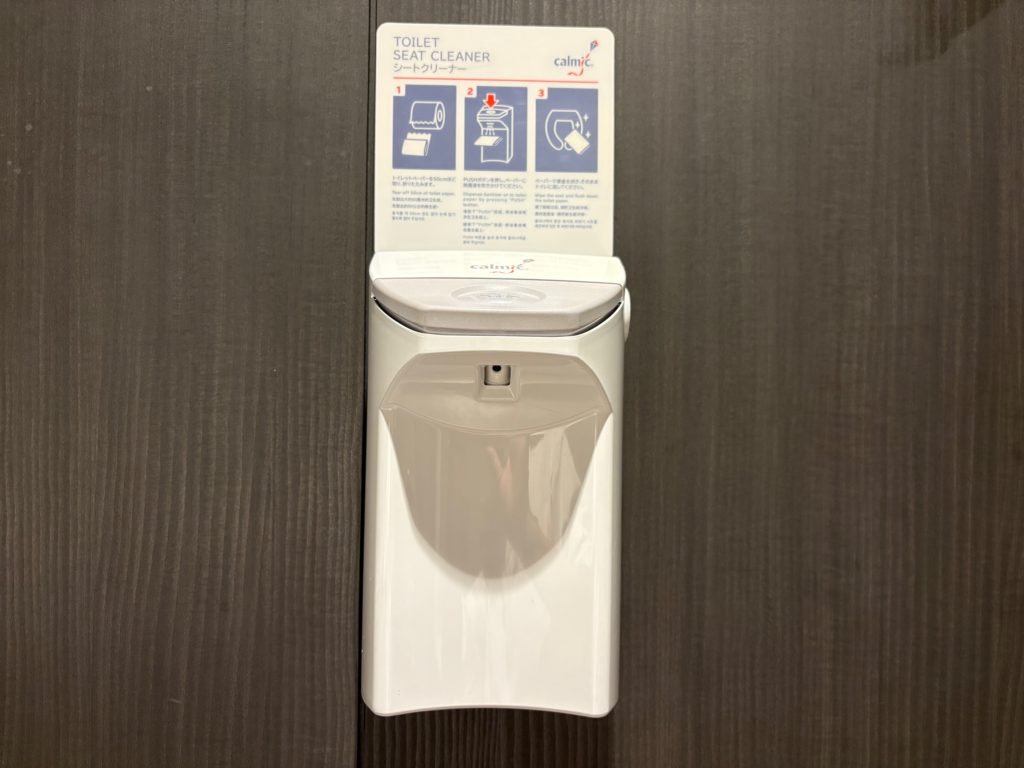
While high-tech electronic bidet toilet seats (Washlets) and privacy features like the “Otohime” (Sound Princess) are certainly sources of Japanese pride, the cleanliness is fundamentally supported by a simple but crucial fixture provided in individual stalls: the Toilet Seat Disinfectant Cleaner (Spray Type).
In most countries, public toilet hygiene centers on avoiding the seat. In Japan, however, the cultural norm is to actively clean the seat before use.
Why did this custom of wiping the seat clean become so deeply rooted?
This practice goes beyond mere hygiene management; it is a concentrated result of a singular focus on self-protection and a unique Japanese philosophy of collective public responsibility.
In this article, we delve into the core of Japanese toilet culture through the lens of this small but significant presence: the toilet seat cleaner.
1. The Disinfectant Ritual: A Practical Act of Self-Defense
If you’ve used public restrooms overseas, you’ve likely found yourself employing defensive tactics—hovering over the seat or creating a makeshift paper barrier to avoid direct contact.
The Japanese approach contrasts sharply by advocating for active disinfection of the surface before use.
In Japan, the toilet is equipped with the spray-type disinfectant cleaner for this express purpose.
The user sanitizes the seat before sitting down, not knowing who was there before, ensuring their own clean and secure experience.
📌 The Function and Mechanics of the Cleaner
The seat cleaner is a simple, effective tool for instant sanitization.
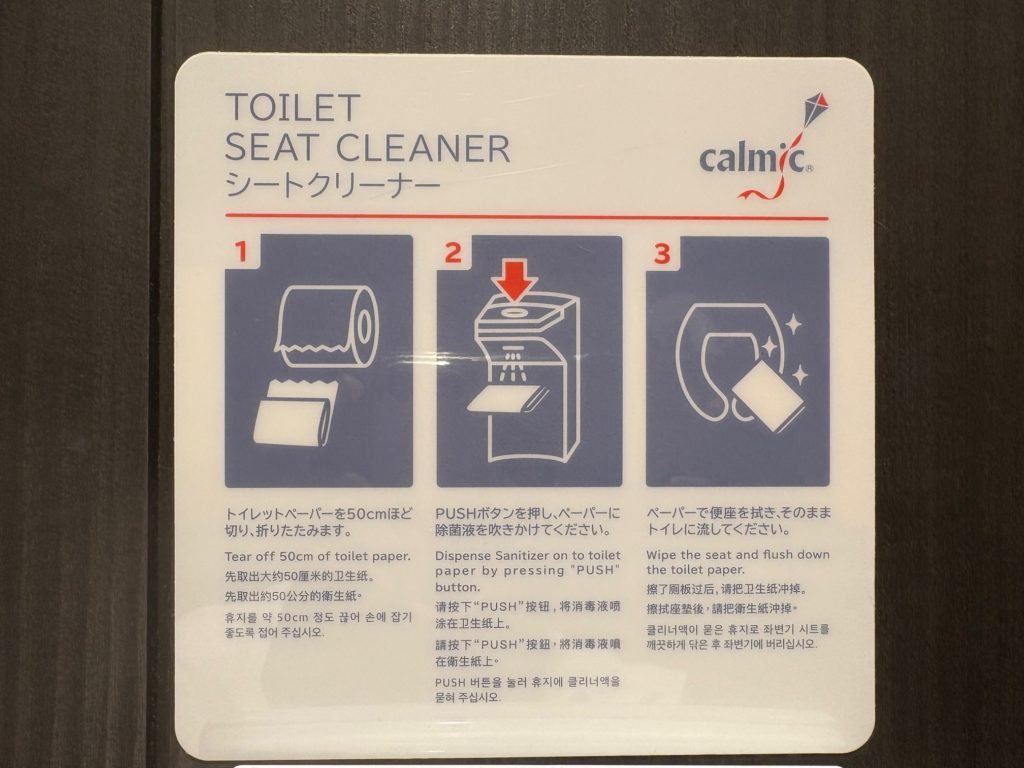
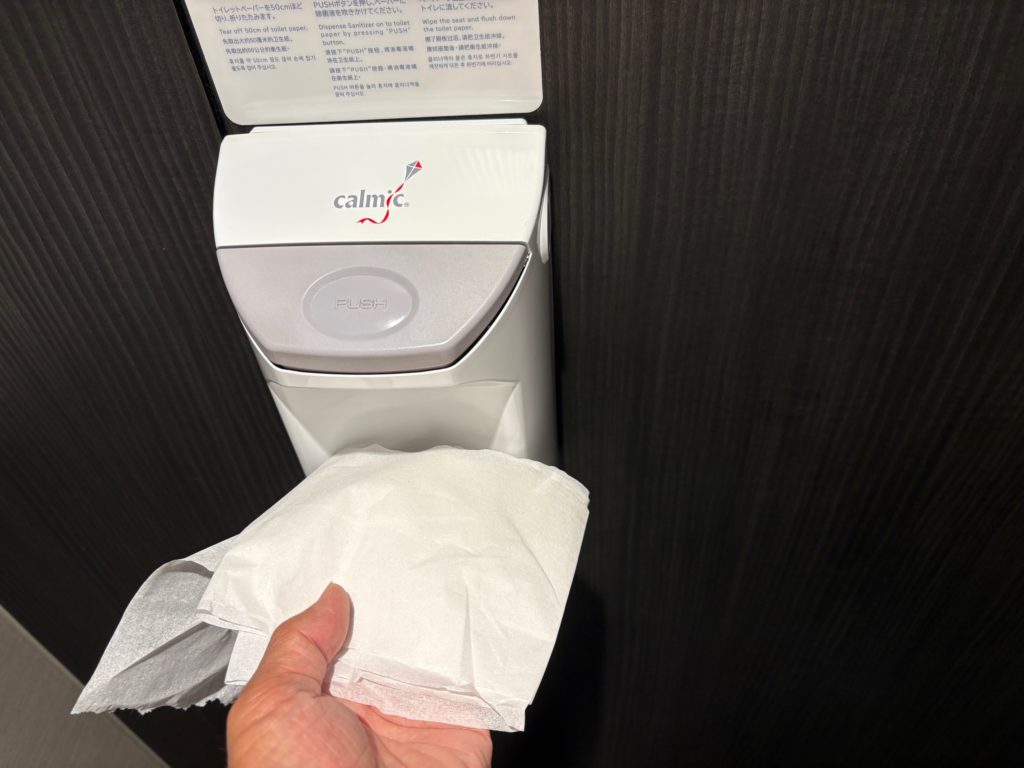
It consists of a compact spray bottle dispensing an alcohol-based or disinfectant liquid. The usage is exceptionally straightforward:
- Tear off a few sheets of toilet paper.
- Spray the cleaner onto the paper.
- Use the moistened paper to thoroughly wipe the surface of the toilet seat.
- Flush the used paper down the toilet.
The primary motivation here is the elimination of personal anxiety.
Disinfecting the seat beforehand allows the user to sit down with a clean conscience and a sanitized surface.
2. The Evolution of Hygiene: From Home Comfort to Public Demand
The widespread use of the toilet seat cleaner is a product of social and technological forces that elevated Japan’s national expectation of cleanliness.
① The “Inflation” of Cleanliness Standards Due to Washlet Adoption
Following the 1980s, the mass adoption of electronic bidet toilet seats (like the Washlet) standardized a high level of hygiene through “washing” within Japanese homes. This technological shift had a profound ripple effect:
- A New Minimum Standard: The national minimum expectation for “what constitutes cleanliness” in a restroom was significantly raised for the entire population.
- Focus on Contact Surfaces: While the Washlet sanitized the posterior, the physical contact point—the toilet seat—remained the last element of anxiety in a public setting.
The cleaner was readily accepted as the concrete, immediate means for users to resolve this anxiety themselves.
② The Rational Strategy of Facility Management
The practice of providing the seat cleaner is not just a kind gesture; it represents a highly rational and pragmatic strategy employed by the facilities themselves to maintain hygiene standards efficiently.
- Behavioral Nudge for Maintenance: The facility’s intent is to subtly encourage user-initiated cleaning.
By placing the tool right there, they make it easy for the individual to act on their impulse for self-protection. - Cost and Image Benefits: Providing the cleaner signals that the facility prioritizes hygiene, boosting its image and user satisfaction.
Crucially, because users clean up for themselves, the overall cleanliness level remains high with less frequent intervention from cleaning staff, optimizing maintenance costs.
This system functions as a highly effective social mechanism, coupling the individual motivation for self-protection with the facility’s desire for efficient hygiene management.
The cleaner is the critical link that transforms private anxiety into public order.
3. Cleanliness as an Individual Responsibility
The fundamental differentiator of Japanese public hygiene is the deep-rooted notion that maintaining the environment you use is your own responsibility.
The toilet seat cleaner serves as the medium through which this individual sense of responsibility is translated into concrete action.
Not Courtesy, but Personal Comfort: The act of using the toilet seat cleaner is not primarily driven by asking, “Who will use this next?” but by answering the more immediate question, “Do I want to sit on a clean seat right now?”
This “act for oneself” is the engine that ultimately drives the societal benefit: “everyone gets to use a clean toilet seat.”
This small spray bottle tells the true story of how Japanese society fuses strong individual hygiene awareness with the rationality of the supporting infrastructure to realize its uniquely clean public spaces.
When you visit Japan, we highly encourage you to try the experience of using this toilet seat cleaner.
| Many people tell me that they only start feeling confused after leaving Japan. If you’re still thinking about something that didn’t quite make sense, I sometimes talk with people privately to help interpret those experiences from a cultural point of view. |