
The Mid-Autumn Harvest Moon (Chūshū no Meigetsu) is a spectacular sight that illuminates Japan’s autumn sky.
This year’s Mid-Autumn Harvest Moon is on October 6th!
Why not learn the meaning behind this year’s moon and enjoy its beauty even more deeply?
🌕 The Basics of Chūshū no Meigetsu (Jūgoya)
When is the Mid-Autumn Harvest Moon?
The Mid-Autumn Harvest Moon is the moon viewed on the night of the 15th day of the 8th month of the old lunar calendar.
| Date in 2025 (New Calendar) | October 6th (Monday) |
The term “Chūshū” means “mid-autumn.” The old calendar designated July, August, and September as autumn months, making the 15th day of the 8th month the middle day of the middle month.
The Difference from “Jūgoya” and “Imo Meigetsu”
- Jūgoya (Fifteenth Night): Originally, this term referred to the 15th night of every month in the old calendar.
However, since the autumn moon is especially beautiful, the 15th night of the 8th month became uniquely known as the Mid-Autumn Harvest Moon. - Imo Meigetsu (Potato Moon): This time of year is when taro (satoimo) and other root vegetables are harvested.
Because moon-viewing was also a festival celebrating the potato harvest, this name is often used.
💡 Fun Fact: Is the Harvest Moon always a Full Moon?
Although we picture a full moon, the Mid-Autumn Harvest Moon doesn’t always coincide with the actual Full Moon (Mochi).
Due to slight variations in the moon’s orbit, the Harvest Moon (the 15th day of the old month) is often offset by a day from the technical Full Moon date.
In 2025, the actual full moon will be on October 7th, the day after the Harvest Moon.
📜 How the Mid-Autumn Moon Viewing Began
The custom of admiring the Harvest Moon came to Japan from China during the Heian Period (794–1185).
The Elegant Pastime of Heian Nobility
The custom, influenced by China’s “Mid-Autumn Festival (Zhōngqiū Jié),” initially spread among nobility in Japan.
They held “Kangetsu no Utage” (Moon-Viewing Feasts), enjoying poetry, music, and sake while gazing at the moon.
A particularly elegant way to enjoy it was to admire the moon’s reflection in a cup of sake or on the surface of a pond.
Spreading to Commoners as a Harvest Festival in the Edo Period
During the Edo Period (1603–1868), the custom spread to the common people.
It took on a strong aspect of a harvest ritual, where people expressed gratitude to the moon for the autumn bounty and prayed for a successful harvest the following year.
This is when the custom of offering dumplings and other harvests became the established form of celebration we see today.
🐇 Why Is There a Rabbit on the Moon?
It’s a familiar sight for Japanese people to spot a rabbit pounding mochi (rice cakes) in the moon’s surface. The origin of this motif is a blend of several legends:
- Buddhist Sutra: One story tells of a selfless rabbit who sacrificed itself to help a traveler.
The heavenly ruler Taishakuten was so moved that he projected the rabbit’s image onto the moon. - Chinese Legend: In China, the moon rabbit is said to be pounding the elixir of immortality.
As this tale traveled to Japan, the concepts of mochi (symbolizing harvest and abundance) and the rabbit (the symbol of the moon) merged to form the familiar image of the moon rabbit we know today.
🎑 How to Decorate and the Meaning of Offerings
Moon viewing is a chance to give thanks for the autumn bounty and pray for health and a good harvest.
| Offering | Meaning/Origin |
| Tsukimi Dango (Moon-Viewing Dumplings) | Round dumplings, resembling the full moon, express gratitude for the rice harvest. It is customary to offer 15 of them. Eating them is believed to bring health and happiness. |
| Susuki (Pampas Grass) | Decorated in place of rice ears, susuki‘s sharp-edged leaves are also believed to have the power to ward off evil. |
| Satoimo (Taro) | As the “Potato Moon” name suggests, taro is essential for expressing gratitude for the harvest. |
| Grapes | Due to their long, winding vines, grapes are considered a lucky charm that strengthens the connection between people and the moon. |
Set up your offerings on a Tsukimidai (moon-viewing stand—a small table works fine) in a spot where the moon can be clearly seen.
After the viewing, it is considered proper etiquette for the family to share and eat the offerings.
Note: While traditional offerings have deep meaning, most modern Japanese households simplify the custom today.
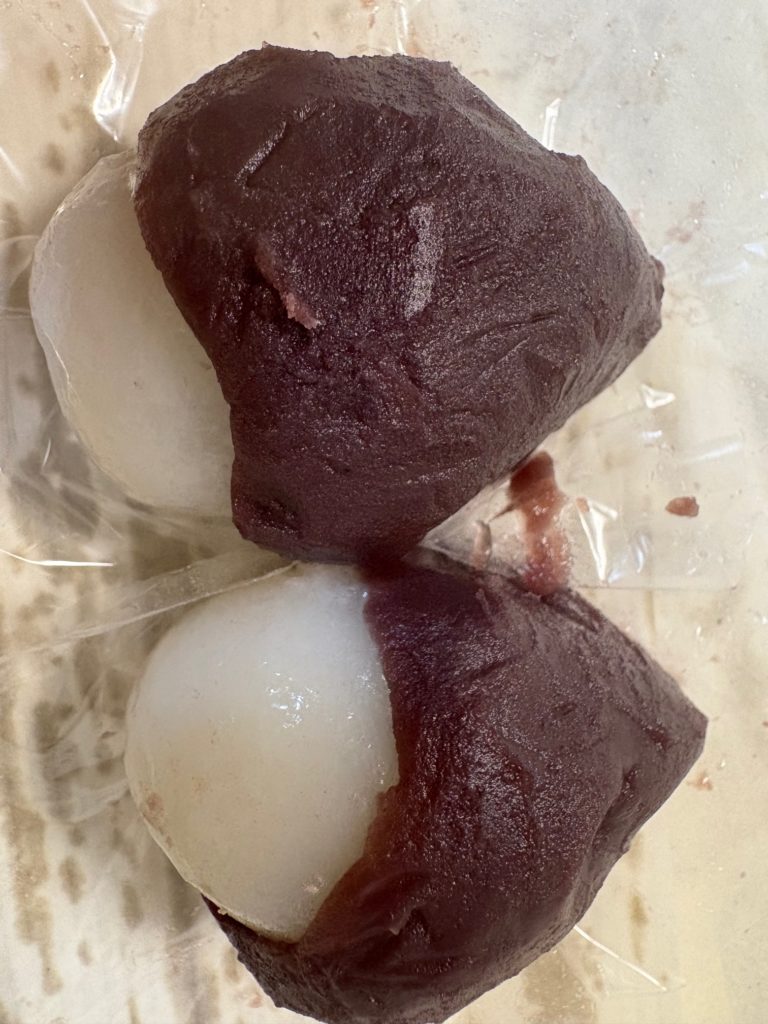
It’s now most common to simply enjoy the beauty of the moon while eating Tsukimi Dango (moon-viewing dumplings).
🌛 Don’t Forget the “Thirteenth Night” Moon!
About a month after the Mid-Autumn Harvest Moon, on the 13th night of the 9th month of the old calendar, there is another unique Japanese moon-viewing custom called Jūsanya (Thirteenth Night).
The Thirteenth Night in 2025 is November 2nd.
It is considered important to view both the Jūgoya and the Jūsanya; only viewing one is called “Katamizuki” (one-sided moon viewing) and was considered unlucky. Since chestnuts and beans are harvested around the Thirteenth Night, it is also known as the “Chestnut Moon” or “Bean Moon,” and these are typically offered instead of taro.
🌙 Conclusion: Spend an Elegant Evening
On a clear autumn night, the Mid-Autumn Harvest Moon is a beautiful sight, but knowing its history and significance allows you to appreciate it even more fully.
This year, why not prepare some dango and pampas grass, and spend a refined moment gazing at the moon, reflecting on the generations who have enjoyed this same night sky before us?
[Footnote: What is the Old Calendar?]
The Old Calendar (Kyūreki) is the lunisolar calendar that Japan used until 1872 (Meiji 5).
Since it is based on the moon’s phases, traditional events like the Harvest Moon, Tanabata, and Lunar New Year are calculated using these dates, which is why their corresponding dates on our modern solar calendar (Gregorian calendar) change every year.
| 【PR】 Your trip planning is almost complete! Complete your preparation by securing the one guide that guarantees confident interactions and a truly respectful experience in Japan. [Get the Kindle Edition Now on Amazon] |