
In Kyoto’s Gion district, a place steeped in historical ambiance, you’ll find a small, vermilion shrine nestled by the Shirakawa River and the Tatsumibashi Bridge. This miniature sanctuary is the Tatsumi Daimyojin (Tatsumi Great Bright God), which locals commonly call “Tatsumi Shrine.” This very scene is a defining symbol of Gion Shinbashi, designated as a National “Important Preservation District for Groups of Traditional Buildings.”
This is no mere sightseeing spot. It’s a sacred place for the people who live and work in Gion, especially the Maiko (apprentice geisha) and Geiko (geisha), a mysterious power spot condensing the essence of Kyoto’s history and legend.
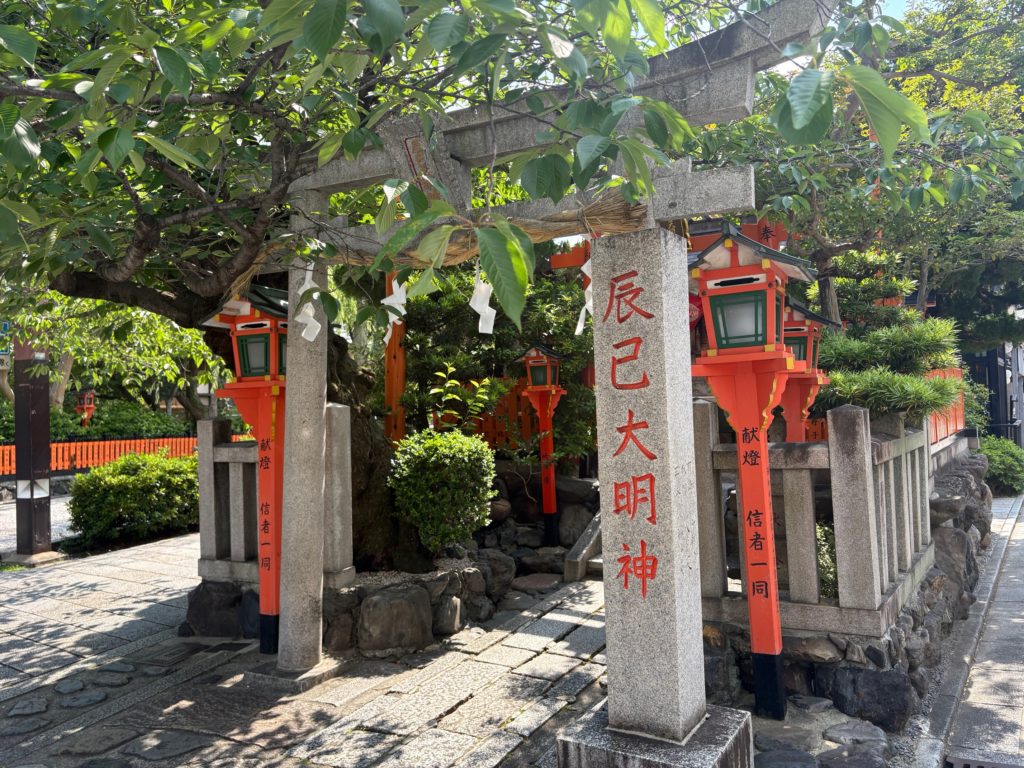
1. The Unexpected Origin of the Tatsumi Daimyojin Name
The shrine’s name, “Tatsumi,” refers to a cardinal direction derived from the Chinese Zodiac (Jūnishi).
While the common name is “Tatsumi Shrine,” the official name inscribed on the stone pillar is “Tatsumi Daimyojin.”
“Tatsumi” Means the Southeast Direction
Tatsumi Daimyojin was originally enshrined to guard the Southeast direction from the Kyoto Imperial Palace.
- The direction of Tatsu (Dragon, East-Southeast) and the direction of Mi (Snake, South-Southeast) meet in the middle to designate the Southeast (45 degrees east from due south, or 135 degrees). This is the meaning of “Tatsumi.”
- In the ancient Chinese system of divination (I-Ching), this direction is written as “Son” (巽) and was regarded as one of the auspicious directions (Kichi Hōi). The nearby Tatsumibashi Bridge takes its name from this location.
(Note: The primary directions—East, South, West, and North—are represented by single Zodiac characters: U (East), Uma (South), Tori (West), and Ne (North).)
💡 Trivia: The Four Corner Directions of the Zodiac
Beyond Tatsumi, the Zodiac also designates the other three corner directions. Knowing these historical names enhances your appreciation of local Japanese place names.
| Direction | Zodiac Combination | Name / Alternate Character | Meaning |
| Northeast | Ushio and Tora | Ushitora (丑寅) / Gon (艮) | The Kimon (Demon Gate) |
| Southeast | Tatsu and Mi | Tatsumi (辰巳) / Son (巽) | The Yōmon (Auspicious Gate) |
| Southwest | Hitsuji and Saru | Hitsujisaru (未申) / Kon (坤) | The Ura Kimon (Back Demon Gate) |
| Northwest | Inu and I | Inui (戌亥) / Ken (乾) |
2. Is the Deity a Raccoon Dog?! Two Mysterious Legends
Despite its small stature, Tatsumi Daimyojin is steeped in two fascinating foundation legends.
The Raccoon Dog Enshrined as a Deity
While the messenger of an Inari Shrine is typically a fox, the Tatsumi Daimyojin—sometimes called the “Gion Inari”—is believed to actually enshrine a Tanuki (raccoon dog).
Legend says that a mischievous Tanuki lived by Tatsumibashi Bridge, repeatedly fooling people into falling into the river at night.
Exhausted by the pranks, the locals decided to enshrine the raccoon dog as a god. Once this was done, the mischief instantly ceased.
From White Snake to Benzaiten Faith
The second legend relates closely to the shrine’s current blessings.
Originally, an old local household worshipped a White Snake as its guardian deity (Yashikigami) on this very spot. When the house moved, the shrine remained. Since the White Snake is often regarded as a messenger of Benzaiten (the goddess of arts, music, and wealth), the shrine began to attract worshipers seeking improved artistic skills and prosperity.
The “Tanuki’s appeasement” and the “White Snake (Benzaiten’s messenger) faith” are two distinct roots that merged, firmly establishing the shrine’s role as the god of “Artistic Perfection.”
3. The Holy Ground for Geiko and Maiko: Gion’s Pillar of Faith
What makes Tatsumi Daimyojin truly special is the deep devotion it receives from Gion’s Kagai (Flower Town).
Geiko and Maiko regularly visit the shrine to pray for the improvement of their performing arts (Gei) so they can succeed in their daily training and performances.
- A Picturesque Location: The sight of Maiko in their beautiful kimonos offering their prayers here is the very embodiment of Kyoto’s charm. It frequently appears as a backdrop in period dramas and films.
- Proof of Devotion: If you look around the shrine, you will notice vermilion-lacquered Tamagaki (fences).
These are inscribed with the names of famous Geiko, established Ocha-ya (teahouses), actors, and performers, showcasing just how vital this shrine is to the entire Gion community.
4. Visitor Highlights: The Most Beautiful Tatsumi Daimyojin
When you visit Tatsumi Daimyojin, be sure to savor the surrounding scenery.
- Tatsumibashi Bridge: Located right next to the shrine. The combination of the stone pavement, the lattice-windowed houses, and the flowing Shirakawa River creates the iconic beauty of the Gion Shinbashi Preservation District.
- Cherry Blossom Season: In spring, the cherry blossoms fully engulf the shrine, creating a mystical sight. The beauty is particularly striking during the evening light-up (Shirakawa Yoi-zakura) period.
When you find yourself in Gion, take a moment to pause before this small sanctuary, which is perfectly blended into the beautiful stone-paved streets and the Shirakawa River. Especially at night, when the lanterns cast a warm glow, Tatsumi Daimyojin becomes the most photogenic “place of prayer” where history and culture truly breathe.
🏮 Essential Information
| Item | Detail |
| Name | Tatsumi Daimyojin (たつみだいみょうじん) (Commonly: Tatsumi Shrine) |
| Blessings | Artistic Skill Improvement, Business Prosperity, Good Health |
| Location | Motoyoshi-cho 59, Higashiyama-ku, Kyoto (Junction of Gion Shinbashi, Shirakawa Minami-dori, and Shinbashi-dori) |
| Hours & Fee | 24-hour access, Free |
| Office/Goshuin | None (Unmanned shrine) |
| Access | Approx. 5-minute walk from Keihan Railway’s Gion-Shijo Station |
Walk the Streets of Gion with Us!
Ready to discover this hidden gem in person?
Join us on our “Kyoto Free Walking Tour in Gion District” to see the Tatsumi Daimyojin and the beautiful Shirakawa area with a local guide!
| 【PR】 Your trip planning is almost complete! Complete your preparation by securing the one guide that guarantees confident interactions and a truly respectful experience in Japan. [Get the Kindle Edition Now on Amazon] |