
Chion-in Temple: A Deep Dive into Its History and Highlights
Chion-in Temple is one of the most iconic temples in Kyoto.
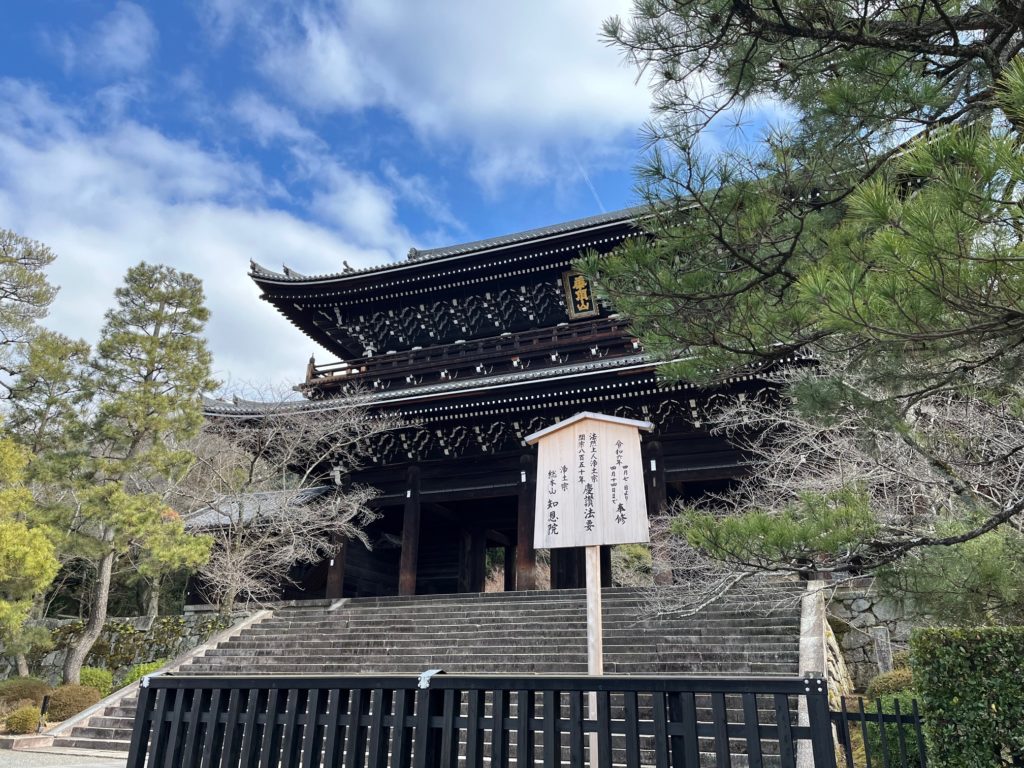
As you pass through its massive, monumental Sanmon Gate, designated a National Treasure, you’ll be overwhelmed by its majestic atmosphere.
This article will introduce you to the must-see spots and little-known history of Chion-in Temple to help you enjoy your visit even more.
1. The Overwhelming Presence of the National Treasure, Sanmon Gate
The face of Chion-in is its gigantic Sanmon Gate, which stands at a height of 24 meters (30 meters from the bottom of the stairs) and a width of 50 meters.
It is the largest existing wooden gate in Japan. Its sheer size is so impressive it will take your breath away just to look up at it.
The Sanmon Gate was actually built during the Edo period by Tokugawa Ieyasu.
Chion-in is the final resting place of Honen Shonin, the founder of the Jodo sect.
The Tokugawa clan had a deep faith in Honen Shonin, and under the protection of the shogunate, this magnificent temple complex was constructed.
The massive Sanmon Gate and the later Mieido Hall were built as symbols to pass on the greatness of Honen Shonin to future generations.
In the upper level of the gate, Buddhist statues and vibrant murals are enshrined, a sight that is truly breathtaking.
While it’s usually closed to the public, be sure to visit if there is a special opening.
2. Otoko-zaka and Onna-zaka: Which Path Will You Choose?
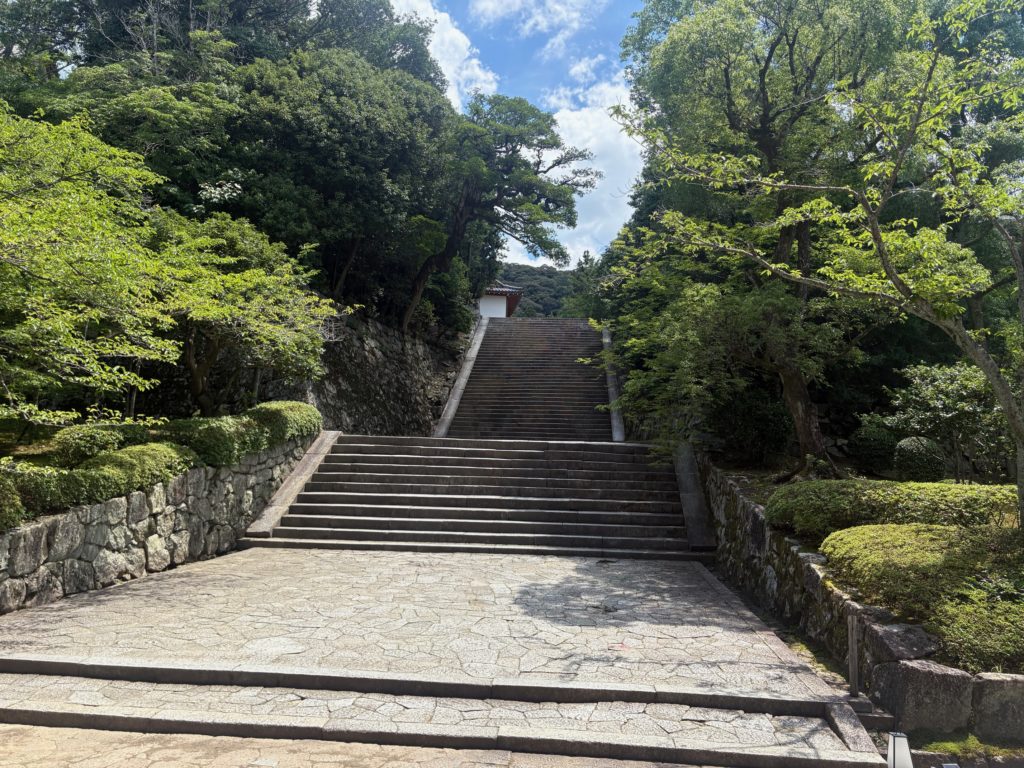
After passing through the Sanmon Gate, you will see two paths in front of you.
One is a steep stone staircase that leads straight to the main hall, commonly known as the Otoko-zaka (Man’s Slope).
Each step is about 24 cm high, making it a challenging path, almost like a form of ascetic training.
This staircase is also famous as a filming location for the movie “The Last Samurai,” starring Tom Cruise.
It’s a unique experience to walk the same path the movie’s protagonist did.
The other path, on the right side, is a gentle stone-paved slope called the Onna-zaka (Woman’s Slope).
While it is longer, its gentle incline allows you to climb at a leisurely pace while enjoying the scenery.
You can choose either the steep, historic Man’s Slope or the scenic, serene Woman’s Slope depending on your mood and physical condition.
The Grandeur of the National Treasure, Mieido Hall
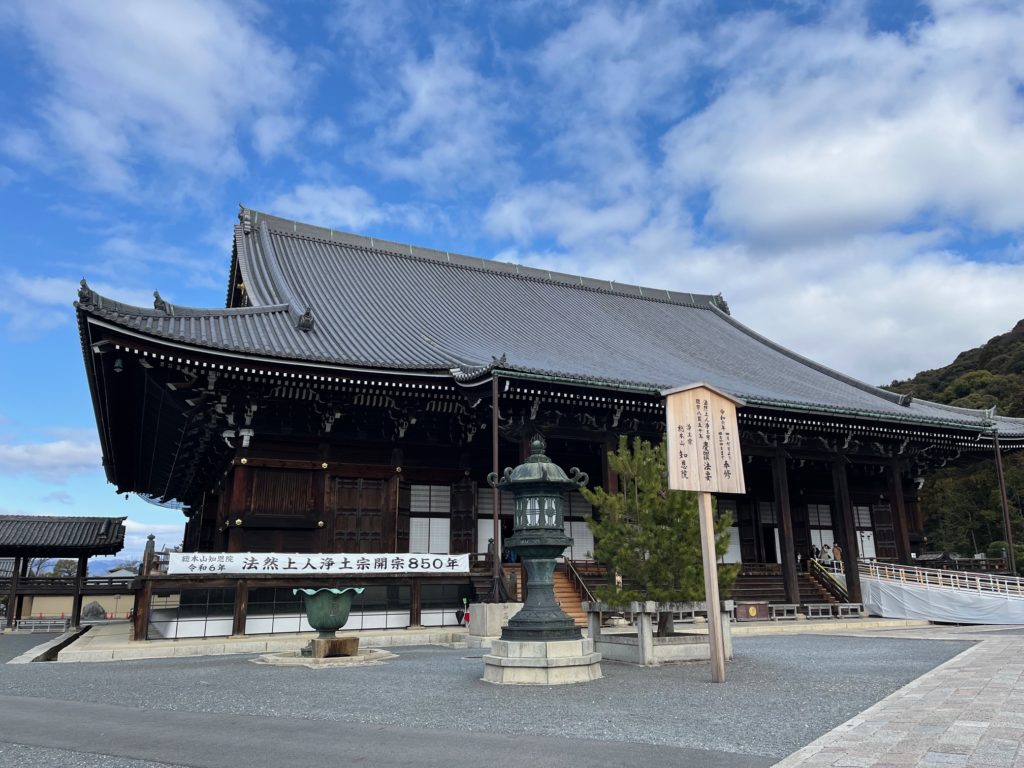
The center of Chion-in Temple is the Mieido Hall, also designated a National Treasure.
It enshrines a wooden statue of Honen Shonin, the founder of the Jodo sect, and is therefore known as the “Mieido” (Hall of the Founder’s Image).
1. Rebuilt by the Tokugawa Clan to a Grand Scale
This Mieido Hall was rebuilt in 1636 by the third Tokugawa shogun, Iemitsu.
It boasts an overwhelming scale, with a frontage of 45 meters, a depth of 35 meters, and a height of 28 meters.
Its size is unmatched among modern Japanese Buddhist temples and demonstrates the deep faith the Tokugawa clan had in both the Jodo sect and Honen Shonin.
The repair of the Mieido Hall involved over 8,000 craftsmen and took about nine years to complete in 2020.
The magnificent roof, pillars, and vibrant interior decorations are a true masterpiece that fuses modern technology with traditional craftsmanship.
2. The Solemn Space Inside the Mieido Hall
Upon entering the Mieido Hall, you are enveloped in a sense of quiet and solemnity.
The inner sanctuary, where the wooden statue of Honen Shonin is enshrined, is filled with golden light and adorned with beautiful religious ornaments.
Visitors can join their hands in prayer and quietly reflect on the teachings of Honen Shonin.
Chion-in Temple is a truly representative landmark of Kyoto, packed with a grand scale and historical romance.
Why not find your own way to enjoy it—whether by reminiscing about a movie scene or searching for its seven mysteries?
We hope you will experience it with us on our Kyoto Free Walking Tour in Gion District.
You Might Also Like
・Yasaka Shrine Kyoto: From Plague Prayers to Geisha Origins
・Shinto Shrines vs. Buddhist Temples: A Journey into the History of Japanese Prayer