
Introduction: More Than Just Clean Floors
If you’ve ever stayed at a traditional Japanese inn (ryokan) or visited a Japanese home, you’ve likely encountered a quiet but profound ritual: removing your shoes at the entrance.
While it may seem like a simple act of cleanliness, this custom is deeply rooted in Japan’s climate, architecture, religious beliefs, and cultural values.
In fact, even within the home, different rooms are treated with distinct reverence—some believed to be inhabited by household deities.
From the genkan (entryway) to the toilet, each space carries its own spiritual and social significance.
Let’s explore why Japanese people remove their shoes indoors and change into toilet slippers, and what these everyday gestures reveal about Japan’s invisible layers of meaning.
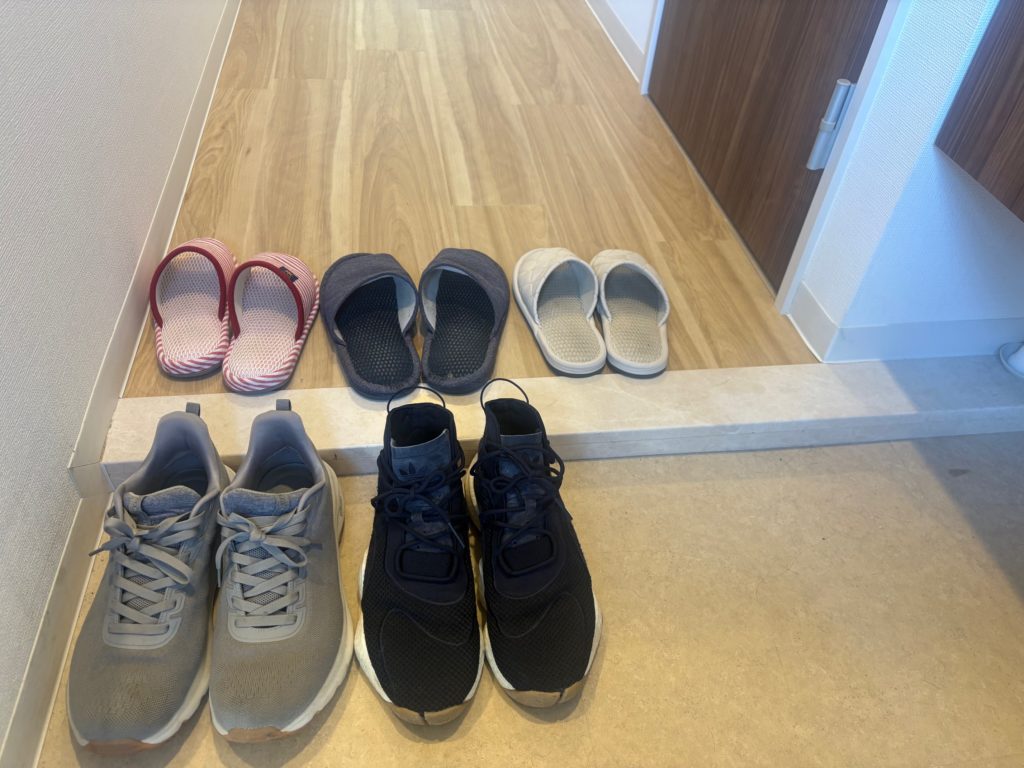
Why Do Japanese People Remove Their Shoes at Home?
1. Cleanliness and Hygiene
Traditional Japanese homes use delicate flooring materials like tatami mats and wood, which are easily damaged or dirtied by outdoor shoes.
In pre-modern times, unpaved roads meant shoes were often covered in mud and dust.
Removing them at the entrance was a practical way to keep the home clean—especially when people sat or slept directly on the floor.
2. Climate and Architecture
Japan’s humid climate led to elevated home designs (known as takayuka-shiki) to prevent moisture buildup.
The genkan, a lowered entryway, became a natural boundary where shoes were removed before stepping into the raised, dry interior.
3. The Genkan as a Spiritual Threshold
The genkan isn’t just a physical space—it’s a symbolic one. In Buddhist tradition, the word “genkan” refers to the gateway to enlightenment.
Stepping over the threshold is akin to leaving the outside world behind and entering a sacred, peaceful realm. Removing shoes becomes a ritual of purification.
4. Shinto and Buddhist Concepts of Purity
Japanese spirituality emphasizes the distinction between clean and unclean, or seijō and fujō.
The home is considered a sacred space, and removing shoes is a way to prevent external impurities from entering.
It’s a quiet act of respect toward the invisible spirits believed to dwell within.
5. Sensory Culture and Tatami
Tatami mats invite barefoot living. Their texture, scent, and warmth are best appreciated through direct contact.
This fosters a “five-sense culture” where the body connects intimately with the space—something shoes would disrupt.
6. Traditional Footwear Design
Japanese footwear like geta and zōri were designed for easy removal.
Their form supported a lifestyle where frequent transitions between indoor and outdoor spaces were common.
Why Do Japanese People Use Toilet Slippers?
1. Separation of Clean and Unclean Spaces
In Japanese homes, the toilet is considered a fujō (unclean) space.
To prevent contamination, residents switch to dedicated toilet slippers before entering.
This practice reflects Shinto beliefs in spatial purification and boundary-setting.
2. Hygiene and Practicality
Toilet floors may harbor moisture and bacteria.
Slippers protect the feet and prevent germs from spreading to other rooms. Importantly, these slippers are never worn outside the toilet area.
3. Hospitality and Manners
Providing toilet slippers for guests is a gesture of omotenashi—Japanese hospitality.
It shows care for the guest’s comfort and cleanliness, and subtly communicates respect for the sanctity of the home.
🧭 The Invisible Layers of Japanese Etiquette
These everyday actions—removing shoes, switching slippers—are more than habits.
They are expressions of Japan’s layered cultural consciousness. Each movement reflects a respect for space, for others, and for unseen presences.
In many homes, it’s believed that deities reside in specific rooms: the kitchen has the fire god, the toilet has the kawaya no kami, and the bedroom may house ancestral spirits. Cleanliness is not just physical—it’s spiritual.
Conclusion: A Quiet Ritual of Reverence
The Japanese custom of removing shoes and using toilet slippers is a beautiful intersection of practicality, spirituality, and social grace.
It reflects a worldview where space is sacred, boundaries are respected, and even the most mundane actions carry meaning.
For travelers and culture enthusiasts, understanding these customs offers a deeper appreciation of Japan—not just as a place, but as a philosophy of living.
You Might Also Like
・Why Japanese Students Change Shoes at School