
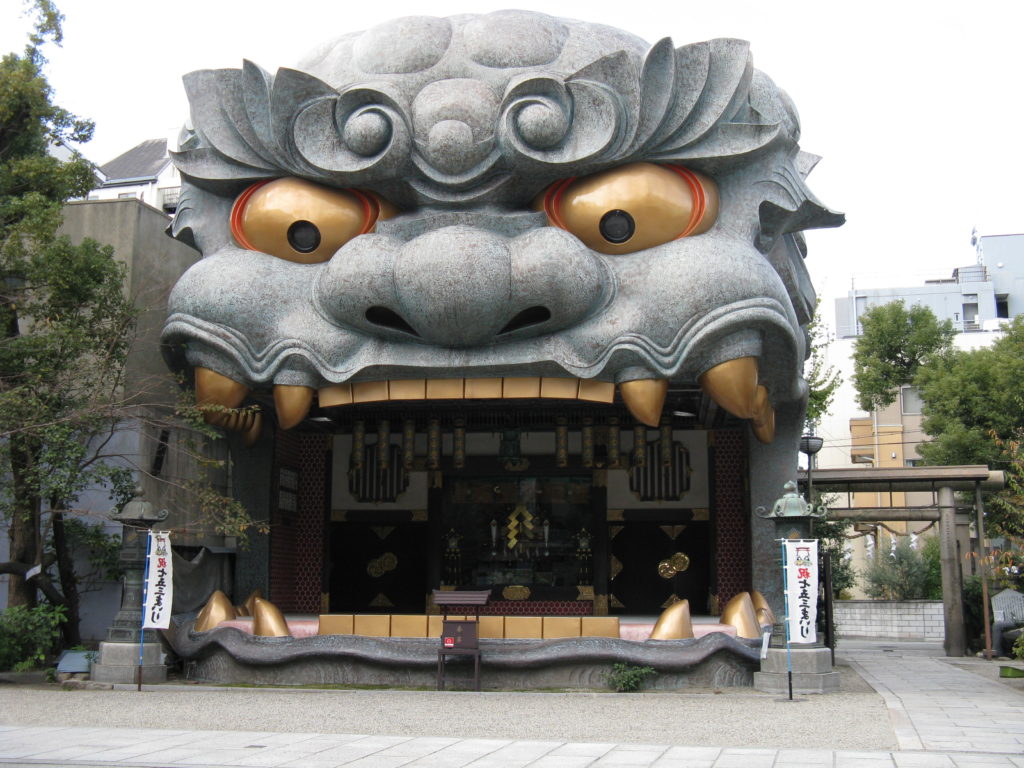
Just a short walk from the bustling heart of Osaka’s Namba district, tucked away in a quiet residential neighborhood, stands a surreal and majestic sight: a giant lion’s head emerging from the cityscape.
This is Namba Yasaka Shrine, a unique cultural sanctuary where history, faith, and sculptural beauty converge.
I recently visited the shrine for a tour preview, and I was struck not only by the overwhelming presence of the lion-shaped hall but also by the deep reverence it continues to inspire among locals.
This is not just a quirky photo spot—it’s a living place of prayer, quietly pulsing within the city’s rhythm.
Basic Information
- Location: 2-9-19 Motomachi, Naniwa-ku, Osaka City
- Access: Just a few minutes’ walk from Namba Station (served by multiple train lines).
Though close to the city center, the shrine sits in a peaceful neighborhood, offering a calm and solemn atmosphere. - Admission: Free
The Lion Stage — A Sculptural Marvel
The shrine’s most iconic feature is the Shishi-den, a massive lion-shaped building measuring 12 meters high and 11 meters wide.
Its gaping mouth is said to swallow evil spirits and invite good fortune and victory.
Inside the lion’s mouth is a stage used for ceremonial performances such as kagura (sacred dance) and shishimai (lion dance), especially during New Year and summer festivals. During these events, the lion’s eyes are illuminated, creating a dramatic and unforgettable scene.
Deities and Blessings
Enshrined Deities
| Deity | Blessings |
| Susanoo-no-Mikoto | Protection from misfortune, warding off epidemics, prosperity in business, agricultural abundance |
| Kushiinadahime-no-Mikoto | Love and marriage, marital harmony, safe childbirth |
The shrine’s faith is rooted in the myth of Susanoo slaying the eight-headed serpent Yamata-no-Orochi.
Like Kyoto’s Yasaka Shrine, Similar to Kyoto’s Yasaka Shrine, Namba Yasaka also honors Gozu Tennō, the guardian deity of Gion, although the name is written differently.
Main Blessings
- Victory & Success: The lion’s mouth symbolizes swallowing evil and inviting success, making the shrine popular among students, job seekers, entrepreneurs, and anyone facing a challenge.
- Protection & Healing: Founded to ward off epidemics, the shrine is deeply associated with health and misfortune protection.
- Love & Family: As a shrine to a divine couple, it’s also revered for matchmaking, marital harmony, fertility, and safe childbirth.
- Wealth & Safety: A wide range of blessings are offered, making it a beloved power spot for many.
Annual Festivals
- Tsunahiki Shinji (Rope-Pulling Ritual) — Held on the third Sunday of January, this dynamic ritual reenacts Susanoo’s mythic battle against the serpent. Participants pull a giant rope representing the serpent to drive away misfortune and pray for prosperity.
Designated as an intangible folk cultural asset by Osaka City. - Summer Festival (July) — Features both boat and land processions, blending local energy with sacred tradition.
Other Highlights
- Sasayama Shrine: Dedicated to Jūbei Sasayama, an Edo-period magistrate who helped establish Osaka’s Kizu Market.
- Battleship Mutsu Memorial: Honors the 1,021 crew members of the Japanese battleship Mutsu, offering prayers for peace.
- Goshuin & Charms:
- Unique lion-themed goshuin (shrine stamps)
- Playful and auspicious charms like Koi-Koi Mamori (love carp) and Ichinen Antai Mamori (peaceful sea bream), blending wordplay with good fortune.
History & Origins
- Founded: Believed to date back to the reign of Emperor Nintoku (late 4th to early 5th century), when the shrine was established to ward off a local epidemic.
- Nickname: Known historically as Namba Shimo-no-Miya, the guardian shrine of the Namba area.
- Postwar Reconstruction: The original buildings were destroyed in the 1945 air raids. The current main hall and lion stage were rebuilt in 1974.
Closing Thoughts
Namba Yasaka Shrine is more than its striking lion façade.
It’s a place where ancient myths, local devotion, and modern urban life coexist. In the midst of Osaka’s vibrant energy, this shrine offers a moment of quiet strength and spiritual grounding.
If you’re visiting Osaka, don’t miss this powerful and poetic corner of the city—it’s a rare encounter with the sacred in the everyday.
You Might Also Like
・Hozenji Temple: Osaka’s Quiet Sanctuary